


The Second FFplus Open Call for Business Experiments was Successful: 21 Sub-projects were Selected for Funding

The second FFplus Open Call for Business Experiments (Type 1) addresses the uptake of HPC by SMEs in order to solve specific business challenges of SMEs that have had no prior use of, or experience with, HPC services.
The indicative total funding budget for all sub-projects under this call was €4 million, with a submission deadline of 26 August 2025. The Fortissimo Open Calls have a long-standing reputation, attracting increasing attention over time. This was also evident in the second open call, which received an unexpectedly high number of proposals, 309 eligible submissions in total, thereby extending the evaluation process until late April 2026. The final selection of business experiments for this tranche follows an extensive evaluation period, including the organisation of well over 200 consensus meetings with external experts.
Open Call Statistics
The FFplus project is delighted to announce that the 2nd tranche of business experiments has now been selected and commenced on May 1st, 2026. Sub-projects will be running for 15 months. When the experiments are successfully concluded, they will result in a success story, inspiring the Industry community.
A total of 309 eligible proposals from 34 countries were evaluated in a two-stage, consensus-based review involving external expert evaluators. In a first stage each proposal was evaluated by two experts to determine whether the impact of the proposal met the call expectations. 86 proposals did not meet the requirements. The remaining 223 proposals were then evaluated again by two independent experts who then held a consensus meeting which resulted in a common evaluation report used for ranking the proposals.
As a result of this process, 21 sub-projects were selected for funding based on their impact, the soundness of the technical concept, the quality of the proposing consortium and the deployment of requested resources.
Country Statistics
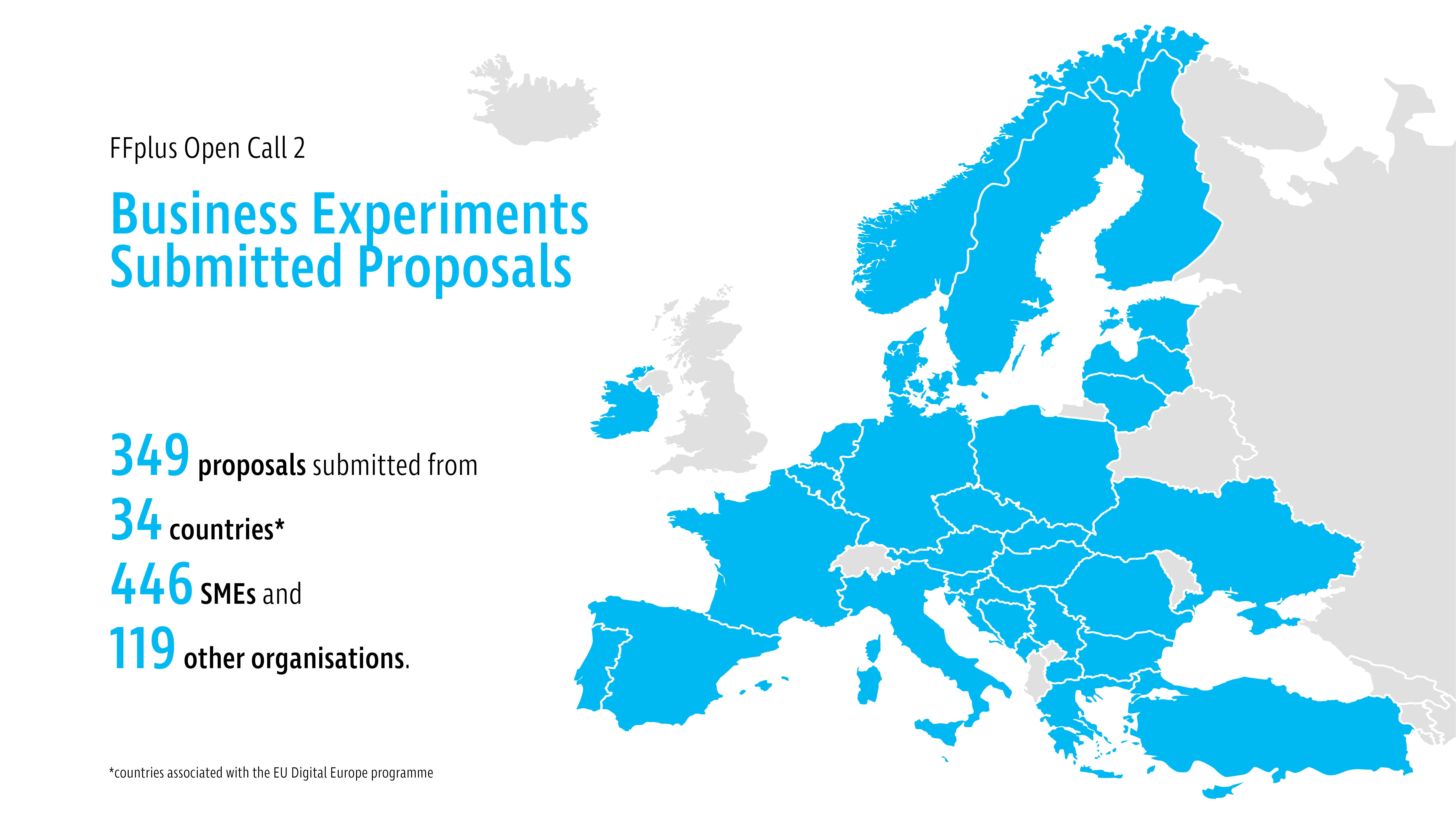
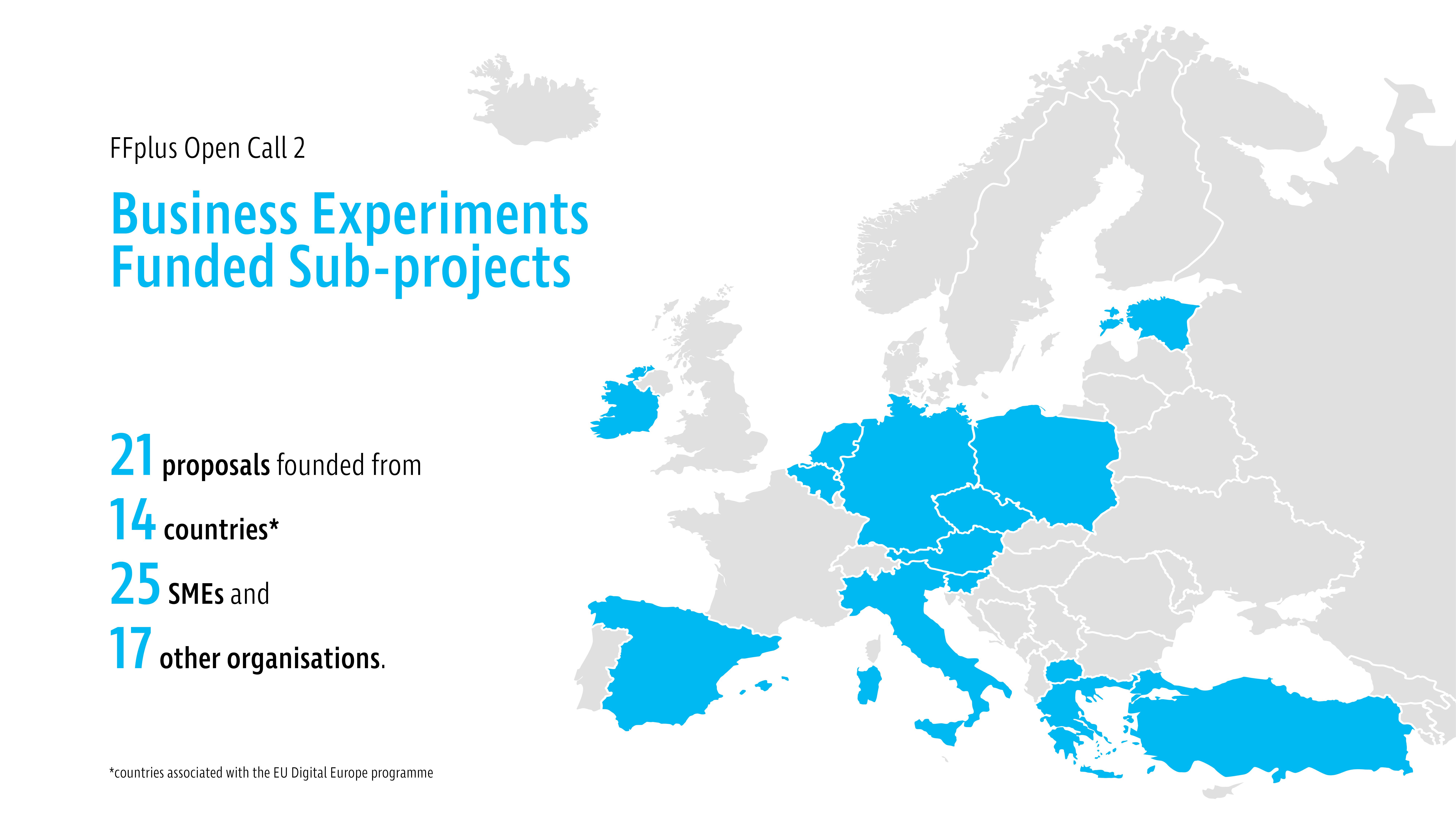
In total, 349 proposals were received, including 565 organisations from 34 European countries. The 21 funded sub-projects involve a total of 42 organisations including 25 SMEs (58% of all organisations) and 17 other organisations from 14 countries.
The sub-projects consist of participants from the following countries: Austria, Belgium, Czechia, Estonia, Germany, Greece, Ireland, Italy, the Netherlands, North Macedonia, Poland, Slovenia, Spain and Türkiye.
The total Open Call-2 budget for Type 1 was €4M, while each FFplus Type-1 sub-project was limited to a total funding of €200,000 aggregated over all its partners. The 21 selected experiments were awarded a total funding budget of €3.96 million.
End-User Domains
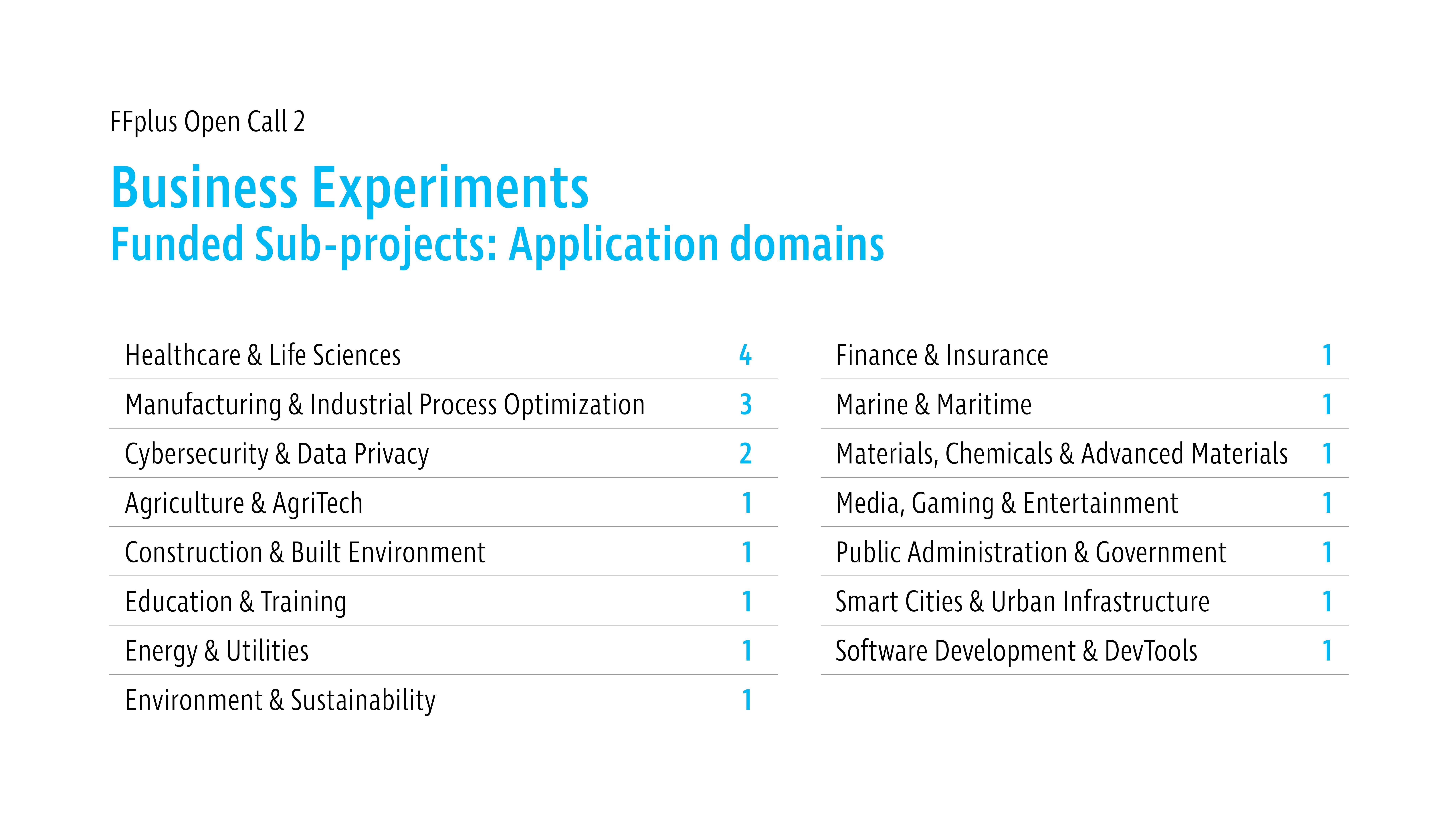
Each of the FFplus Open Call-2 Type-1 proposals targets a specific economic end-user sector, aiming to accelerate innovation and create business value within that domain. There is an extremely broad spectrum of business fields and application scales: from molecules through beetles and ski boots to smart cities and the environment; from drug design and therapeutic solutions through Manufacturing and Engineering to Enterprise Knowledge Management. Among all received proposals, the Healthcare & Life Sciences sector accounts for 42 (12%) and the Manufacturing & Industrial Process Optimisation sector for 30 (8%) proposals. These are followed by Environment & Sustainability with 22 proposals and Energy & Utilities with 20 proposals.
Technologies
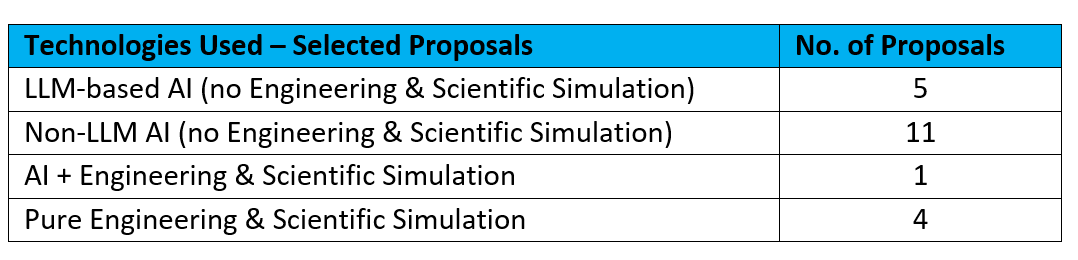
Continuing the trend seen with the first call for proposals, the use of a variety of AI technologies is prevalent, but also the “classical” simulation approaches like CFD or FEM and combinations of AI and simulation, for example within digital twins.
List of funded Business Experiment sub-projects is available here.
More information about the funded sub-projects will be available on the project website soon.