


Aerodynamic and Structural Optimization of Modular Bicycles Using HPC
Organisations involved
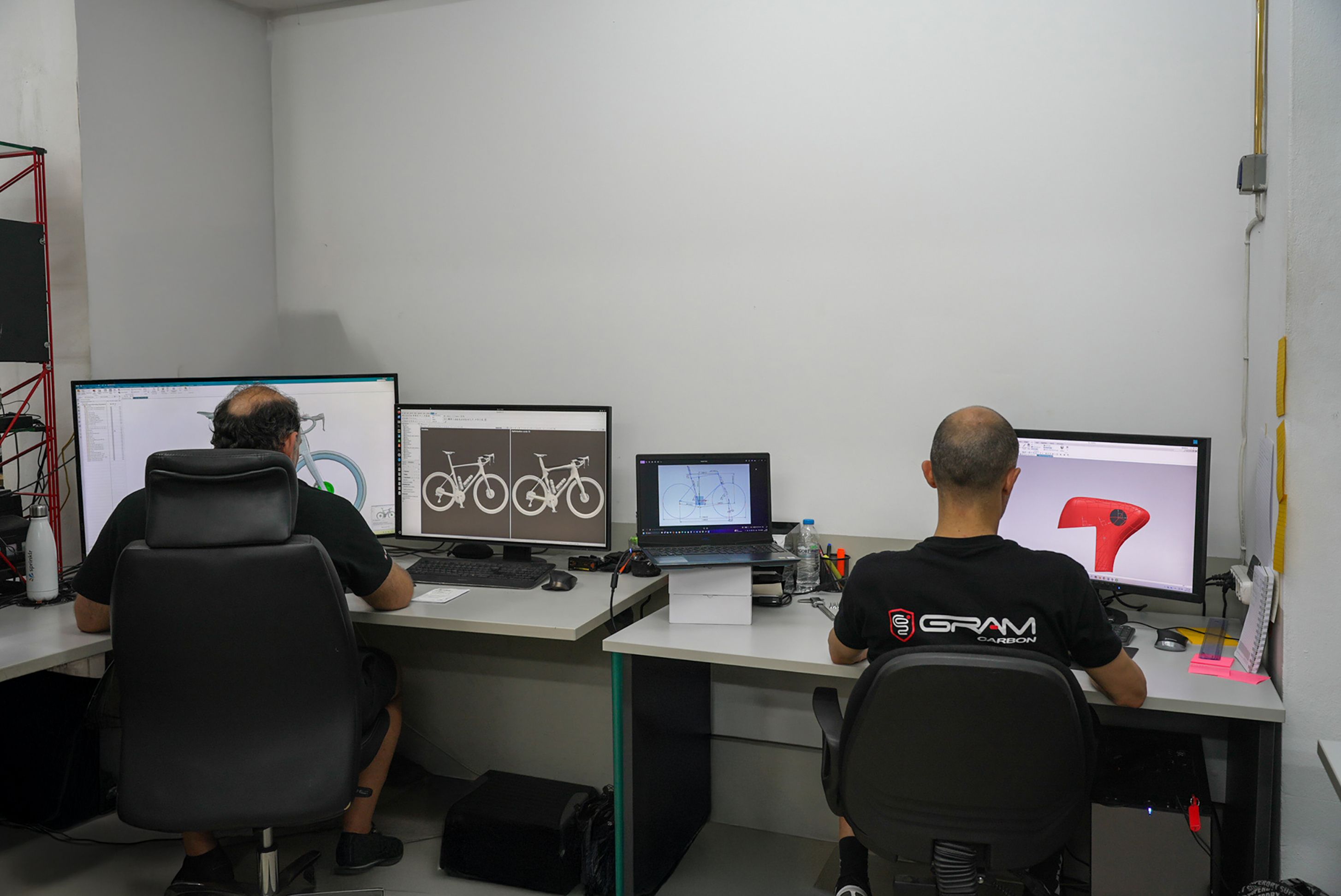
A. Kitselis & Th. Theodoridis O.E. (Advanced Engineering - AE) is a Greek SME, designing and manufacturing bicycles for competitive and recreational cycling. Its expertise includes manufacturing with Carbon Fiber Reinforced Polymers and structural analysis.
National Technical University of Athens (NTUA) is widely recognized as Greece's premier university and it provides the expertise in CFD, aerodynamic optimization and HPC.
Politecnico di Milano (PoliMi) is one of Italy's leading technical Universities. In this business experiment, it provides consulting on automated CFD workflows and HPC related guidance.
Flow and optimization software & Services (FOSS)is a Greek SME with expertise in HPC and optimization methods. In this business experiment, it provides a black-box optimization tool and guidance for its usage in structural optimization.
The challenge
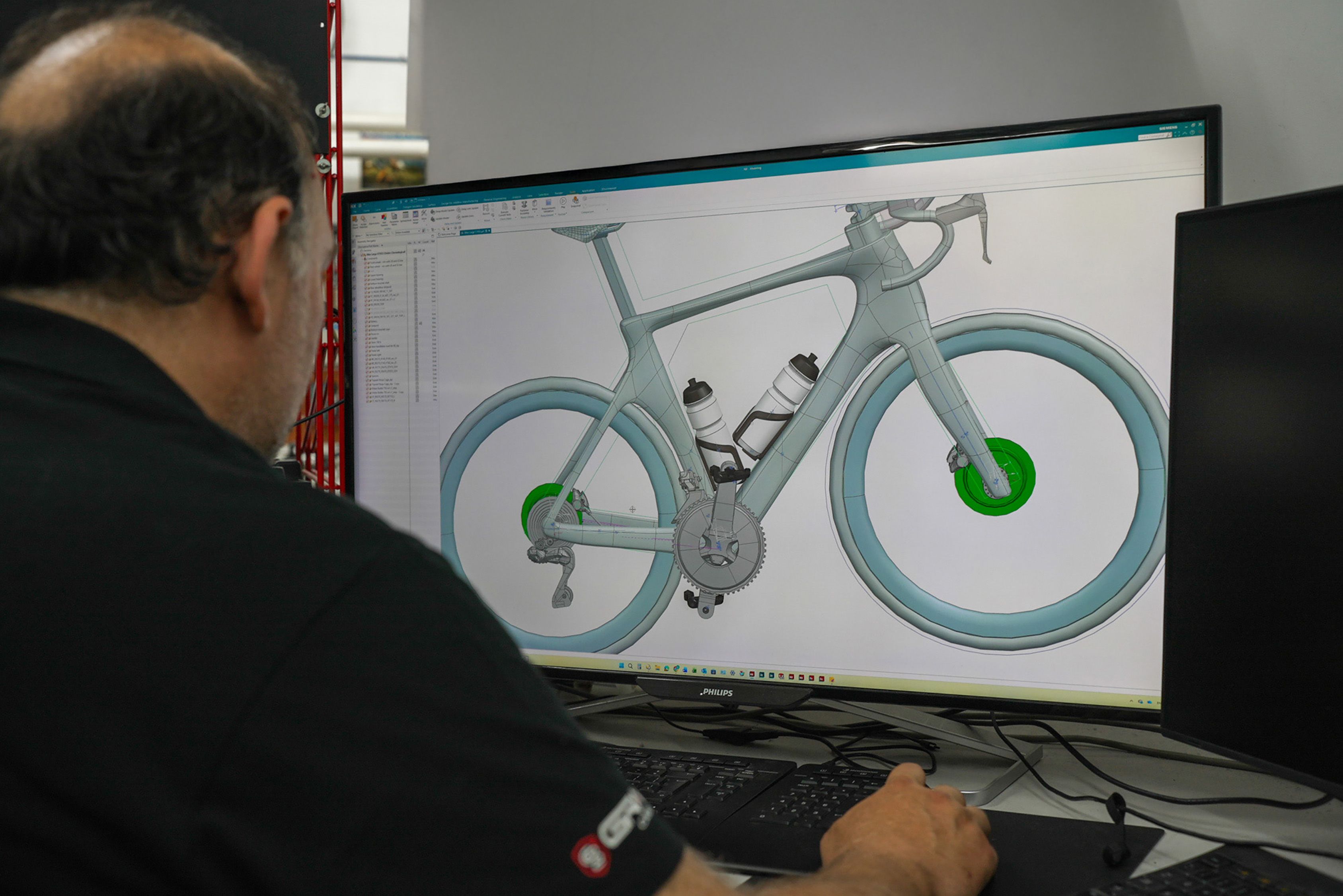
A. Kitselis & Th. Theodoridis O.E. (AE) intends to create a new, innovative modular road bicycle which can be transformed into a triathlon bike by simply switching a few components, and sell it under the brand name Gram. This would enhance its presence in both the competitive and recreational cycling markets. AE is performing the aerodynamic and structural design of its bicycles through trial-and-error, using the limited computational resources at its disposal. This process can take up to a year for designing a new bicycle. With even marginal performance improvements proving critical in competitive cycling and the design rules changing frequently, this long, trial-and-error process is outdated and cannot provide a competitive advantage to AE. The solution to this problem is to set up an automated Computational Fluid Dynamics (CFD) and Computational Structural Mechanics (CSM) workflow that assists with the aerodynamic and structural optimization of AE's bicycles. Such workflows are only effective when combined with the power of HPC. The target is to achieve shorter design cycles, better performance and more affordable products, strengthening AE's position in the market.
The solution
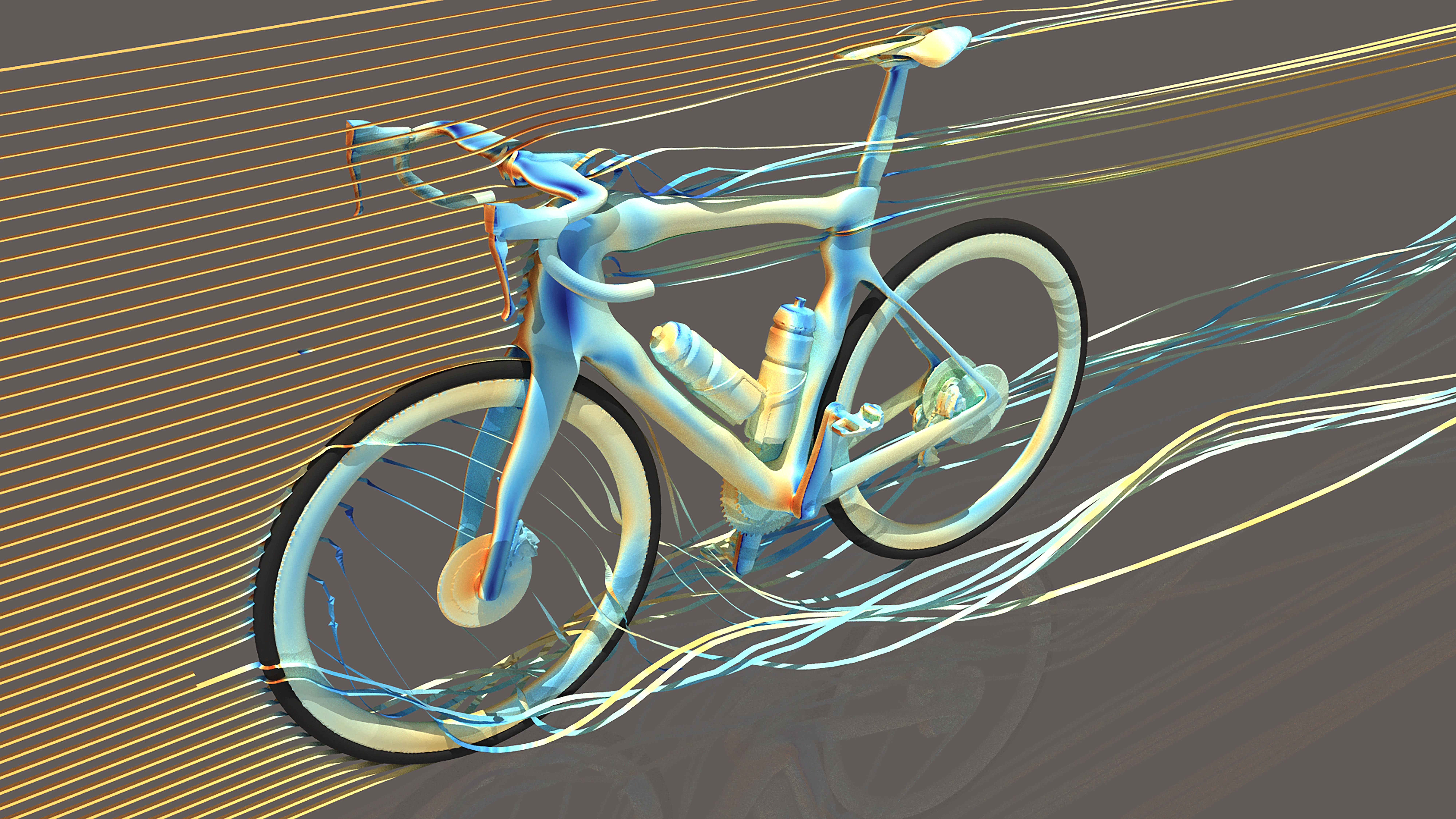
The solution is an HPC-based, CFD and CSM optimization for the new bicycles which was deployed and executed on the LUMI supercomputer. HPC is pivotal for the project, since these optimizations are infeasible with the hardware of AE. Initially, a CFD optimization workflow is set up to aerodynamically optimize the bicycle shape, targeting the reduction of the drag and side forces exerted on the bicycle, in multiple bicycle and air flow velocities, angles and considering several geometric constraints such as wheel-components frame clearance, to make sure the designed shape is manufacturable. This aerodynamically optimized bicycle is then structurally optimized. The goals are to reduce its weight, increase the lateral stiffness for increased performance and improve vertical compliance for comfort, while complying with ISO certifications. To achieve this, the carbon fiber layup is optimized by changing the number of layers, the angles between them and the materials used.
Business Impact
The project has transformed AE’s product development approach by replacing lengthy trial-and-error design processes with an HPC-enabled, data-driven optimisation workflow. This allows the company to develop innovative bicycle designs significantly faster, respond more effectively to changing market demands, and strengthen its competitive position through high-performance products and a unique modular frame concept. The enhanced design capabilities also create opportunities for business expansion beyond the cycling sector. AE plans to apply the same HPC-enabled methodologies to the development of additional cycling components and to enter new markets such as high-performance luxury boats, where aerodynamic, hydrodynamic, and structural optimisation are critical. Furthermore, the development of lighter and more material-efficient products contributes to lower manufacturing waste and a reduced environmental footprint, particularly in applications involving carbon-fibre-reinforced polymer (CFRP) materials, which are challenging to recycle. AE will also use this knowledge to enter new markets such as high performance luxury boats.
Business Benefits
- Reduced design phase by 50%, leading to a similar reduction of design costs.
- Reduced manufacturing costs by 15-20%, due to material savings.
- AE will manufacture the designed frames and estimates to additionally sell 50 bicycles/year, resulting in an increased revenue of up to €350k/year and the creation of two job positions. AE will use the same HPC-enabled tools to develop more cycling equipment: Mountain Bike frames, wheels, handlebars, seatposts, cranksets, etc with an estimated revenue of up to €100k/year and the creation of 1 job position.
- Entry to new markets, such as high-performance luxury boats (design of hydrodynamic or aerodynamic parts with an optimized structural behaviour), with an expected revenue of up to €300k/year and the creation of 2 job positions.