


AI-Enabled Platform for Monitoring and Maintenance of Industrial Equipment
Organisations involved
Nessos Information Technologies S.A. (Nessos) is a Greek independent software vendor specialising in cloud, web, mobile and enterprise systems. As end-user, it leads development and commercialisation of the mAIntAIn platform.
MGroup, the Computational Mechanics and Engineering Simulations group at the National Technical University of Athens, develops advanced numerical modelling, mechanics and data-driven simulation methods. As Technology Expert, it contributes physics-informed modelling and HPC expertise.
The challenge
Maritime operators and other asset-heavy industries depend on reliable machinery but often manage maintenance through fragmented OEM systems, monitoring tools, data pools and enterprise or planned maintenance platforms. This prevents a consistent fleet-wide view, slows technical triage and leaves engineers reliant on manual judgement. The consequences include avoidable downtime, repair costs, port delays, penalties and increased operational and compliance risk.
NessosIT needed to turn large volumes of heterogeneous equipment data into timely, defensible maintenance decisions. This requires repeated finite element method (FEM) simulations, digital-twin calibration, uncertainty analysis and machine-learning training across many operating conditions. Such training models are too intensive for conventional workstations; processing would be too slow for operational use, or models would need to be simplified, reducing accuracy, generalisation and trust. The required innovation is an explainable platform using HPC to combine physics-informed digital twins, data-driven model reduction and fleet-level predictive analytics that convert complex machine behaviour into interpretable risk, anomaly and degradation benchmarks.
The solution
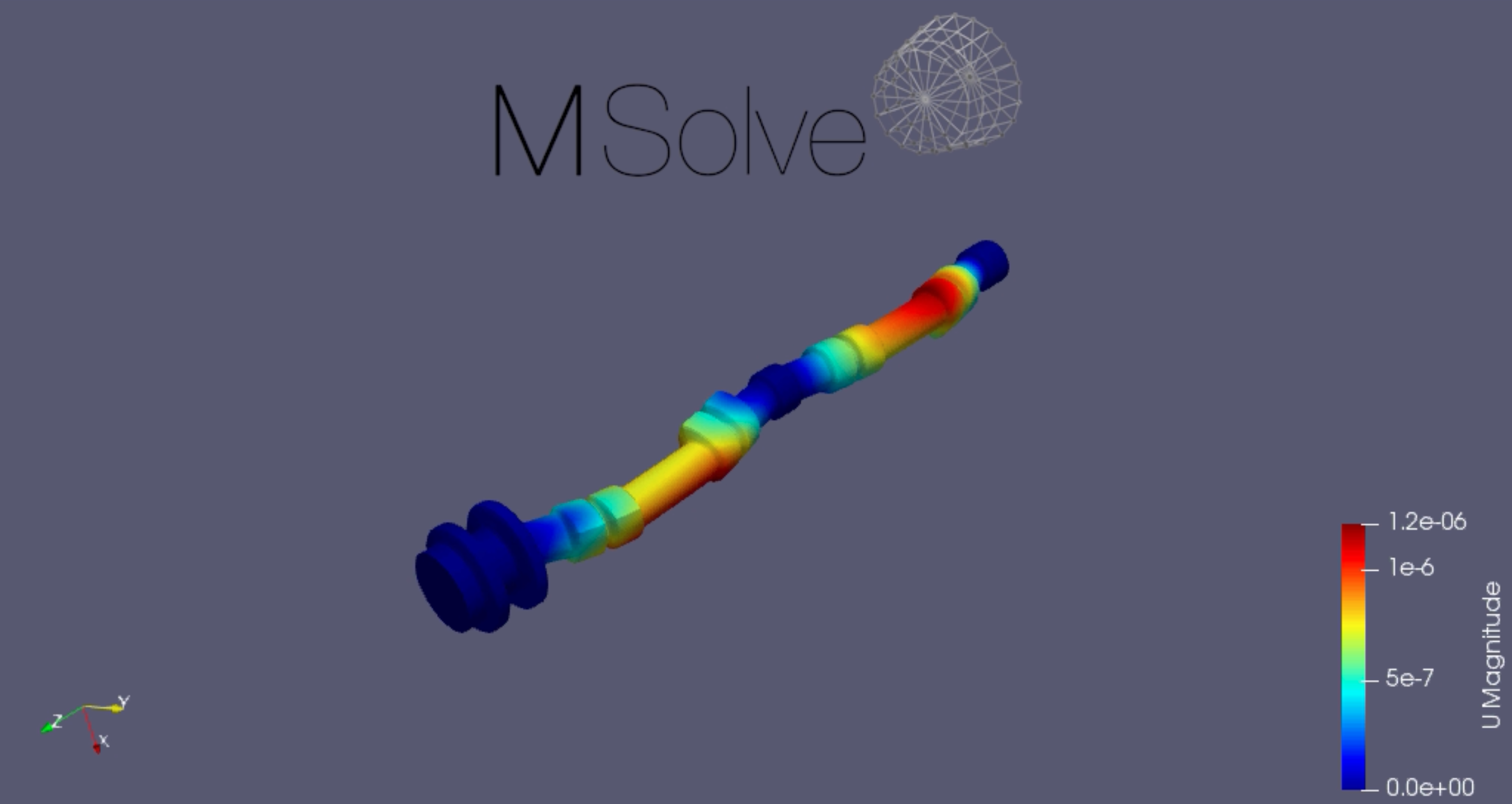
mAIntAIn combines a three-tier Azure platform with HPC batch analytics. Curated equipment measurements are processed through physics-informed simulation campaigns using MSolve. Large parameter sweeps are undertaken for sensitivity and uncertainty, while machine-learning workflows reduce complex data and forecast future behaviours.
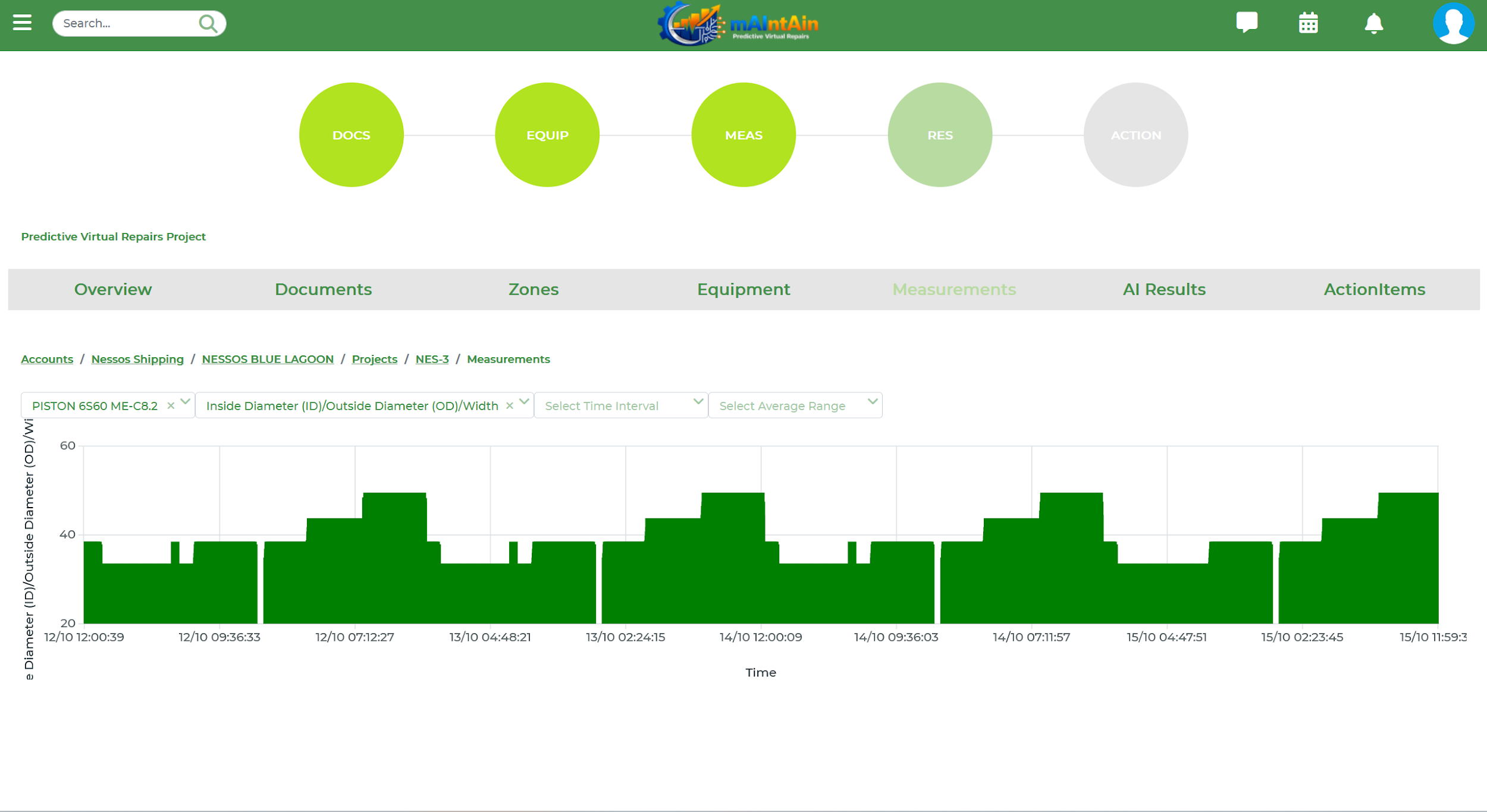
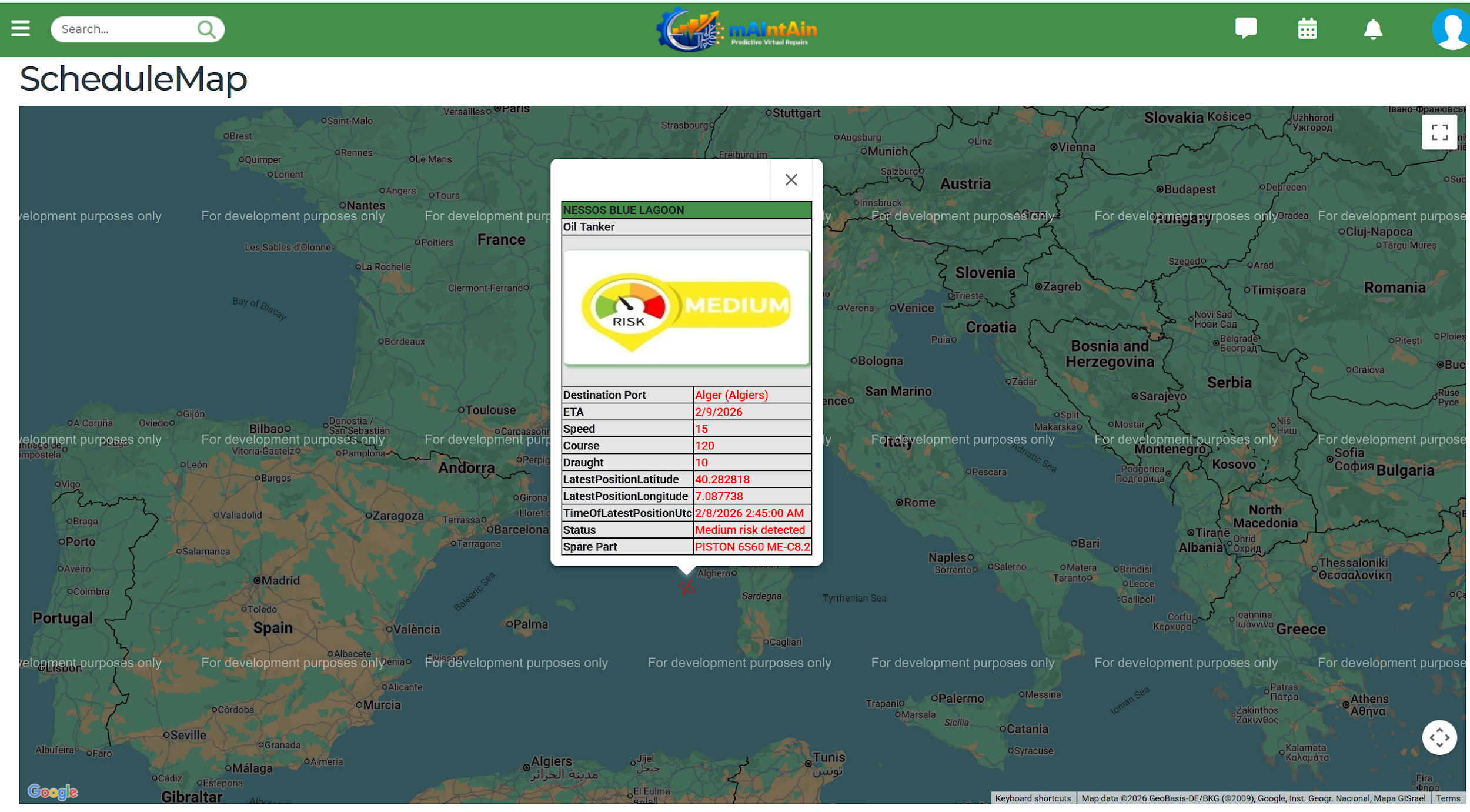
HPC makes it practical to run and calibrate many high-fidelity models across machinery configurations and operating regimes, avoiding slow workstation execution or oversimplified models. The workflows return traceable run records, drift and anomaly scores, risk levels and evidence explaining each result. These outputs become platform findings, predictive alerts, recommended actions, exports and closure workflows for maintenance teams, commended actions, exports, and closure workflows.
Business impacts
Commercialising mAIntAIn gives Nessos a differentiated offer for maritime and other asset-heavy industries, where reliability and compliance shape purchasing decisions. Combining HPC-enabled physics and data models with operational workflows moves beyond generic alarms and strengthens competitiveness. Validation with two maritime companies improves market readiness and supports new customers, renewals and higher-value contracts through ERP, maintenance-system and equipment-vendor integrations. The capability can also extend to industrial plants and energy. For customers, consolidation of measurements, diagnostics, predictive indicators and actions can reduce technical issue triage time by approximately 20-30%. HPC accelerates simulation and model-calibration cycles by approximately 5-10 times versus workstations, enabling faster validation across machinery and operating conditions. Earlier detection and explainable findings support lower unplanned downtime, reduced maintenance costs and faster, consistent and auditable fleet-wide decisions.
Business Benefits
- Validated with two maritime companies, strengthening confidence in real-fleet relevance, operational fit and readiness for commercial deployment.
- Reduced technical issue triage time by approximately 20-30% by unifying measurements, diagnostics, predictive indicators and recommended actions.
- Accelerated simulation and model-calibration cycles by approximately 5-10 times versus workstation execution, enabling faster validation across machinery and operating conditions.
- Expected to support 2-3 new technical jobs across the SME ecosystem in backend development, data engineering, predictive analytics and maritime digital-twin integration.