


Exergy Improved Sealing System

Organisations involved
Exergy International is an Italian SME and global leader in Organic Rankine Cycle (ORC) systems that convert waste heat, geothermal energy and industrial by-products into useful electricity.
EnginSoft is an engineering consultancy specialising in computer-aided engineering, simulation and digital engineering services.
LuxProvide operates Luxembourg’s national supercomputing infrastructure, delivering advanced HPC resources and technical expertise for industry and research.
The challenge
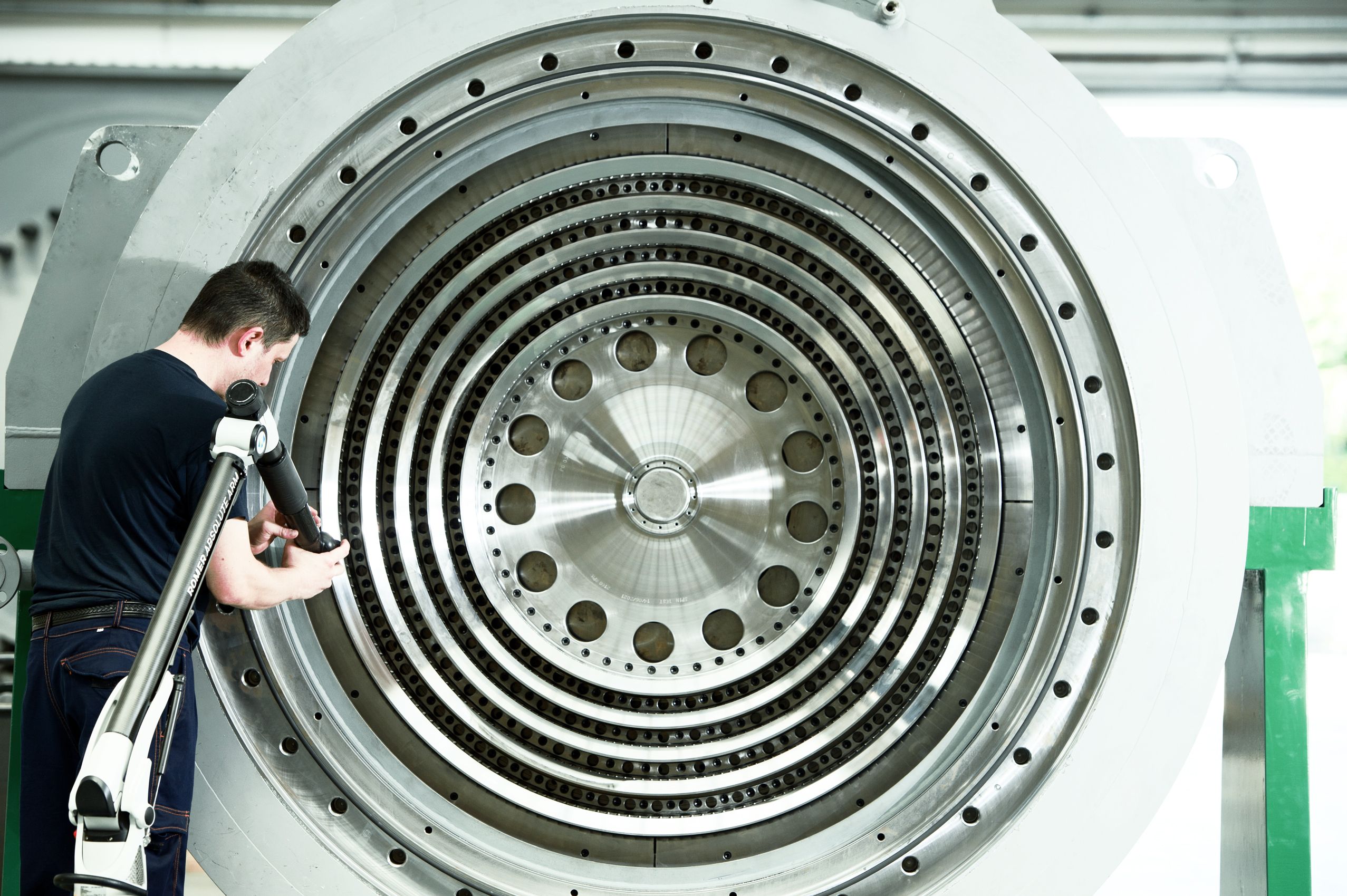
Exergy identified a major efficiency bottleneck in its Waste Heat Recovery (WHR) turbines. While Radial Outflow Turbines perform well in geothermal applications, WHR operating conditions require multistage turbine designs to achieve competitive efficiencies. However, each additional stage increases leakage through the sealing system, reducing performance and causing losses of up to 12% of isentropic power. Improving sealing efficiency was therefore critical to increasing Organic Rankine Cycle (ORC) performance, reducing energy losses and strengthening Exergy’s competitiveness.
Traditional development methods based on physical testing alone would have required extensive prototyping, long development cycles and high costs. Alternatively, detailed analysis of complex flow behaviour across multiple design using high-fidelity Computational Fluid Dynamics (CFD) simulations could be used. However, such simulations demanded fine computational meshes, advanced turbulence models and large-scale parallel processing beyond the capabilities of standard engineering workstations.
The solution
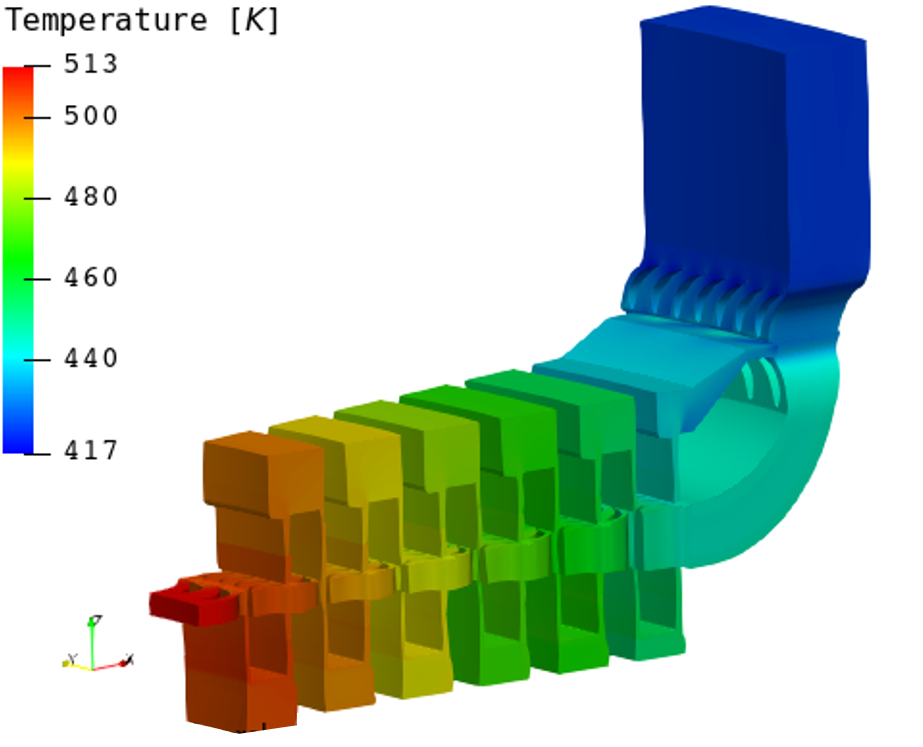
The project developed an HPC-enabled simulation workflow that allowed Exergy to optimise turbine sealing systems more quickly and cost-effectively than conventional trial-and-error testing. Advanced CFD models were used to predict leakage behaviour and assess how different seal geometries influenced turbine efficiency. Access to the MeluXina supercomputer provided the HPC resources needed to evaluate multiple sealing concepts rapidly and accelerate progress towards a target WHR cycle efficiency of 21%.
Around 46 design variants were analysed using parallel simulations on the MeluXina supercomputer, typically employing 128 CPU cores per run.
HPC reduced turnaround times sufficiently to evaluate many more design options within the project schedule. Numerical results were validated through experimental testing, increasing confidence in the models. The work delivered two optimised sealing concepts, including an innovative microfluidic brush seal that outperformed conventional labyrinth sealing approaches and can be deployed across Exergy’s turbine portfolio.
Business impacts
The project has strengthened Exergy’s strategic position in the growing Waste Heat Recovery market by enabling the development of higher-efficiency ORC turbine solutions. HPC allowed the company to replace a significant proportion of costly physical prototyping with virtual design exploration, accelerating innovation while reducing technical risk and developing a market-ready microfluidic brush sealing solution with higher efficiency than conventional labyrinth seals. The resulting sealing technologies provide a pathway towards WHR cycle efficiencies approaching 21%, improving the commercial attractiveness of Exergy’s products for industrial customers seeking greater energy recovery and lower operating costs.
Access to the MeluXina supercomputer also established a repeatable HPC-based engineering workflow that can be applied to future turbine development programmes. This increases Exergy’s capacity to bring new products to market faster and compete more effectively in Europe, Asia and the Americas.
Beyond Exergy, the project expanded partner expertise in CFD-driven design optimisation and demonstrated how European HPC infrastructure can help SMEs accelerate innovation, improve energy efficiency and support industrial decarbonisation objectives.
Business Benefits
- Reduced evaluation time for 46 sealing configurations through parallel CFD simulations using 128 CPU cores on MeluXina.
- Enabled theoretical WHR cycle efficiencies approaching 21%, reducing energy losses in multistage turbines.
- Created a pathway for up to 50% business growth, equivalent to an estimated €25–30 million additional revenue potential.
- Reduced reliance on costly physical prototyping, lowering development risk and accelerating product innovation.
LuxProvide operates EuroHPC’s supercomputer in Luxembourg, delivering advanced HPC resources and technical expertise for industry and research.