


Generative AI-based co-pilot supporting citizen in energy transition by leveraging the benefits of HPC
Organisations involved
Main SME: UBITECH is an Athens-based SME commercially experienced in LLM-based human-AI dialogue systems and GenAI-fueled conversational digital assistants in the energy domain. Founded in 2005, the company develops high performance, explainable AI solutions, robust handling and protection of sensitive data, and the integration of custom avatars. Combining Generative AI and high-performance computing, UBITECH creates scalable solutions across 15 countries, support 31 languages, and handle over 580,000 dialogues monthly, with approximately 94% being self-serviced.
University of Innsbruck is an Austrian research institution advancing cloud and high-performance computing, artificial intelligence, and Digital Twin technologies for the clean energy transition. By bridging advanced computing with practical applications, UIBK delivers solutions that support flexible energy management and empower citizens and communities.
FEN Research is an Austrian non-profit R&D organization focused on transforming the energy system toward climate neutrality and energy autonomy through electricity-based and hydrogen-based solutions. Through interdisciplinary research and innovation, FENR develops scalable solutions for a sustainable, flexible, and low-carbon energy future.
The challenge
Europe’s journey to climate neutrality and green energy transition requires citizens to become active participants in this transformation. Yet, most people still struggle with low energy literacy: limited awareness of renewable energy opportunities, minimal understanding of efficiency measures, and almost no visibility into how energy markets work or how they can benefit from participation. At the same time, energy-sector professionals, including retailers, aggregators, system operators, local energy communities, ESCOs, and energy advisors, lack accessible and trustworthy digital tools to communicate complex information in simple, engaging ways. Existing solutions remain generic, static, and difficult to tailor to different customer needs or dynamic grid conditions. This digital and informational gap slows down the adoption of renewable solutions, behavioral change, and consumer participation in flexibility or local energy initiatives.
For UBITECH, this gap represented both a business opportunity and a technical challenge. The company identified a growing demand among energy companies and public authorities for AI assistants capable of explaining energy concepts, policies, and incentives in an accurate, personalized, and transparent way. However, general-purpose Large Language Models such as Mistral and Llama failed to capture the technical and contextual aspects of the energy domain. Building a domain-specific energy copilot required large-scale model training and fine-tuning on multimodal, real-world energy datasets, which are tasks that exceeded the computational limits of commercial cloud resources.
To address this challenge, UBITECH, together with UIBK and FENR, launched mAIEnergy: a Generative AI-based Energy Copilot powered by EuroHPC JU resources. The goal was to create a high-performance, explainable AI system capable of delivering trustworthy, localized, and data-driven insights that empower citizens to make informed energy choices and accelerate Europe’s clean energy transition.
The Solution
Developing an energy domain Large Language Model required large-scale distributed training,multimodal data processing and extensive experimentation, capabilities that go beyond what commercial cloud resources can provide. Training multiple model architectures required massive computational capacity and high GPU memory. UBITECH leveraged the EuroHPC Leonardo supercomputer, utilizing more than 40,000 GPU hours for large-scale pre-training and fine-tuning. This access enabled the company to train multi-billion-parameter models on multimodal datasets combining text and visual data, achieving high contextual accuracy and explainability in energy-related dialogues. Without EuroHPC infrastructure, training time would have been months longer and cost-prohibitive on commercial cloud platforms. Through FFplus, UBITECH transformed its small-scale cloud experiments into a scalable and commercially viable Generative AI service for the energy sector.
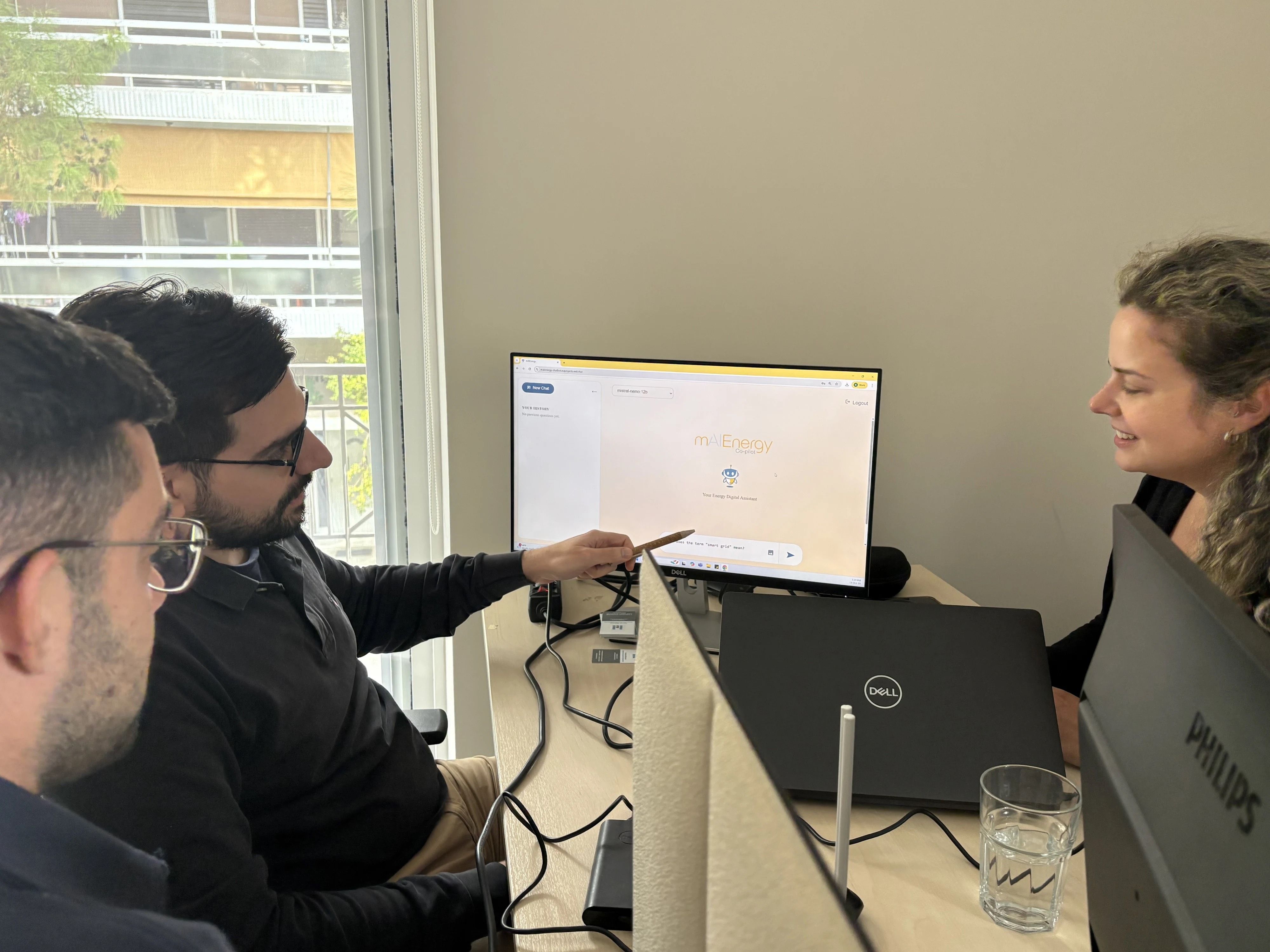
mAIEnergy has developed a Generative AI Energy Copilot, combining specialized Large Language Models with EuroHPC computing power.
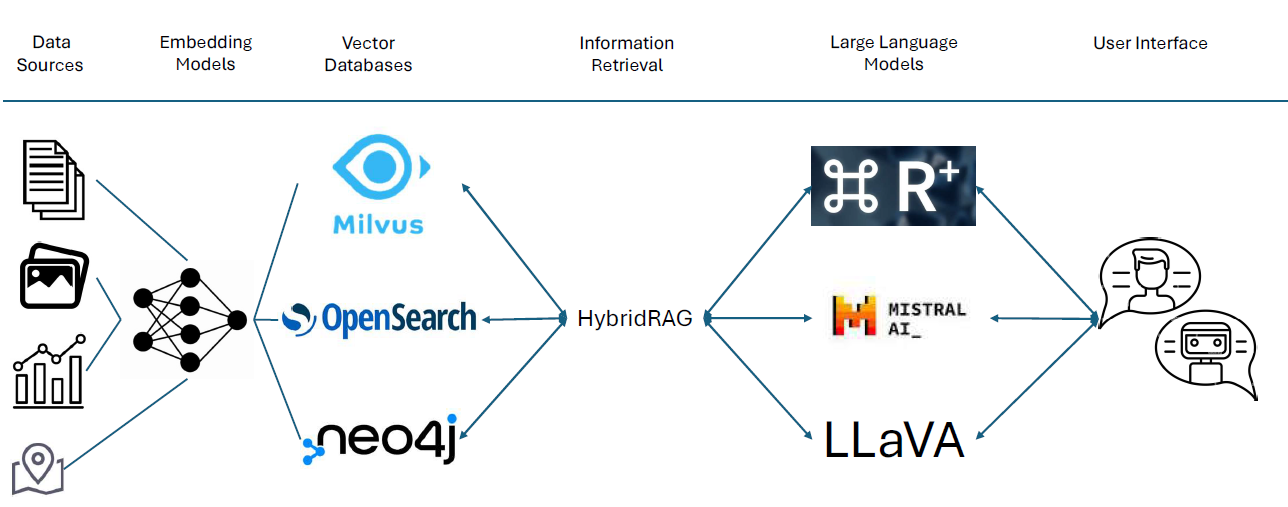
To train an energy-specific model with high contextual accuracy, a large multimodal dataset was collected, curated, and validated including approximately 50,000 textual data, 20,000 image data, 25,000,000 time-series and statistics data, 2,000,000 geospatial-relational data and QA dataset with 1,000,000 question-answer pairs.
Using the EuroHPC Leonardo supercomputer, UBITECH pre-trained and fine-tuned open-source base models such as Mistral, Command-R, and LLaVA. This large-scale distributed training improved domain-specific performance compared to general-purpose LLMs. To ensure trustworthy and continuously updated insights, the system integrates a Retrieval-Augmented Generation (RAG) pipeline linked to a curated energy knowledge base maintained by domain experts. The result is an AI assistant capable of delivering accurate, explainable guidanc and insights tailored to energy consumers and professionals.
Beyond technical innovation, the mAIEnergy can evolve into a scalable SaaS product, ready for integration with energy retailers, aggregators, and local communities and bridging the gap between advanced AI research and real-world citizen engagement.
Impact
mAIEnergy has enhanced UBI's business value proposition by significantly expanding its potential market coverage for the energy sector, while introducing new business opportunities through B2B partnerships and subscription-based digital services for citizens. The FFplus innovation study enabled UBITECH to shift from small-scale cloud experimentation to large-scale AI development using EuroHPC resources. Access to supercomputing significantly reduced model training time and allowed the creation of a high-accuracy, real-time Energy LLM, capabilities that would not have been feasible with commercial cloud infrastructures. The HPC-enabled solution strengthens UBITECH’s competitive position and supports market expansion across Greece and Europe.
At the same time, mAIEnergy empowers citizens by transforming complex energy topics into clear, personalized guidance. Users can compare energy providers, understand available incentives, and adopt more efficient consumption habits, leading to lower bills and reduced emissions. By bridging digital and informational gaps, the Energy Copilot enhances energy literacy and supports active participation in the energy transition.
At societal and environmental level, mAIEnergy contributes to EU climate and energy goals by helping users identify opportunities for renewable integration, energy savings, and carbon reduction, supporting a more informed, engaged, and sustainable energy future. The project also exemplifies how open, and transparent AI innovation can strengthen Europe’s digital sovereignty in the clean energy domain.
Benefits
- 90% reduction in model training time through EuroHPC-powered training, enabling faster iteration cycles and larger-scale experimentation.
- 5% increase in response accuracy and reliability through fine-tuning on curated, domain-specific energy data QA data.
- 90%+ GPU utilization and 40–45% lower computational overhead achieved through optimized LoRA fine-tuning workflows and efficient batch scheduling.
- Transformation of the prototype-level AI assistant into a scalable SaaS solution, increasing accessibility for energy stakeholders and SMEs.
- Creation of a reusable open-source knowledge repository including multimodal datasets, vector databases, and fine-tuned models, supporting transparency and innovation in the energy AI ecosystem.
Success Story Video