


Generative AI for Additive Manufacturing


Organisations involved
BitBang is an Italian SME consultancy specialising in data, analytics and AI solutions for data-driven decision making, helping organisations turn complex operational data into actionable business insight.
BI-REX is one of Italy's eight National Competence Centers, established by the Ministry of Enterprises and Made in Italy as a public-private consortium focused on Big Data, advanced manufacturing, technology transfer and industrial digital innovation.
The challenge
Additive manufacturing can take many hours or days, especially when producing complex parts from high-value materials such as titanium. A print failure detected late in the process wastes material, energy and machine time, disrupts schedules and raises costs. Industrial 3D printers already generate rich data streams, including sensor readings, machine telemetry and layer-by-layer images, but most SMEs do not have the specialist AI skills or computing capacity needed to turn this heterogeneous data into reliable real-time failure prediction.
For BitBang, this market gap created a clear business opportunity: a scalable SaaS service offering ready-to-use predictive models to additive manufacturing companies without requiring in-house AI expertise. However, the company's usual cloud-based stack could not support the required experimentation efficiently. Training and fine-tuning multimodal AI and generative models across large image and time-series datasets created execution times and costs that were impractical. HPC was therefore essential to make model development feasible, accelerate training, compare alternative model families and create a solution robust enough to support different printers, materials and production use cases.
The solution
BitBang developed a SaaS platform that gives additive manufacturing companies access to AI-based failure prediction through a simple self-service interface. Users connect live printer data, including sensor signals and layer images, then select the model suited to their process. The platform returns real-time forecasts so operators can intervene before a costly failure occurs.
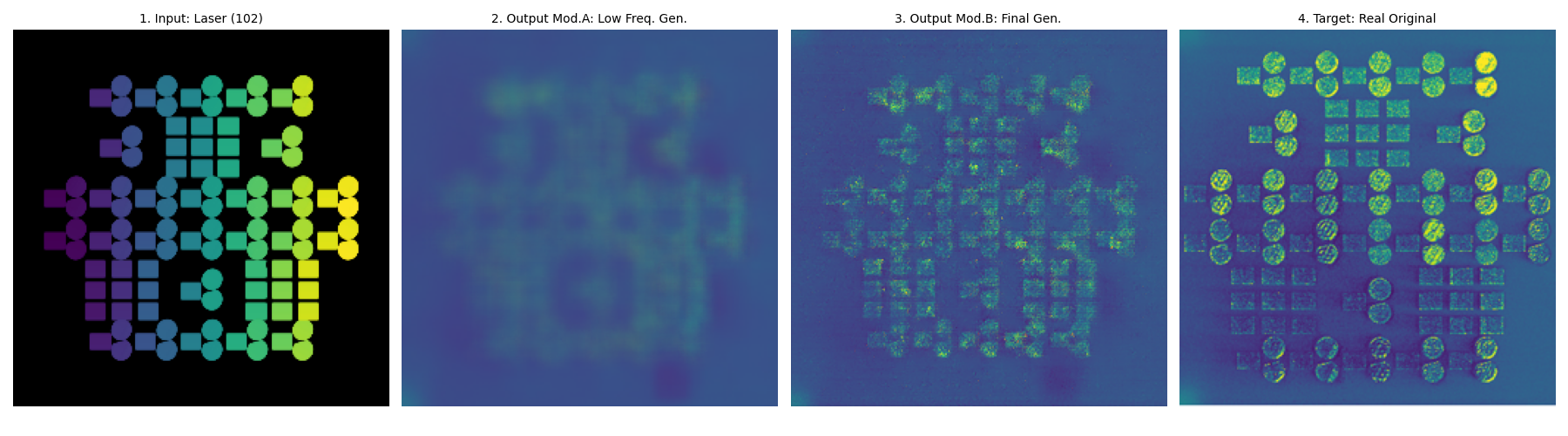
The solution combines pre-trained multimodal AI and generative AI models, including Amazon Science's Chronos time-series models and GANs for image-based analysis. EuroHPC's Leonardo system trained and fine-tuned multiple models on large, heterogeneous datasets. This required approximately 14,000 GPU hours, showing why HPC was critical for scalable training, model quality and deployment readiness.
Business impacts
The experiment moves BitBang from project-based analytics work toward a repeatable industrial product for additive manufacturing. It creates a route to recurring revenues through annual subscriptions, pay-per-model use and services such as configuration, model adaptation and support. Indicative pricing of about €10K per customer per year, plus up to €40K in additional services, provides a scalable model and strengthens BitBang's position as an HPC-enabled AI provider for manufacturing SMEs.
For customers, the impact is a stronger business case for AI-assisted 3D printing. Earlier evidence on whether a build is likely to complete helps managers cut avoidable losses, plan machine capacity and protect costly materials such as titanium. Reducing failed prints and material waste by up to 20-30% can deliver direct savings on complex builds that may occupy a machine for a week. Lower rework, shorter cycles and reduced energy use support more sustainable manufacturing and create partnership opportunities with 3D printer vendors.
Business Benefits
- New SaaS product with expected €10K annual subscription revenue per customer and recurring access fees.
- Around €40K per customer in value-added services for model customisation, fine-tuning and specialist consulting.
- Differentiated HPC-enabled AI offer for SME additive manufacturing users that lack in-house AI infrastructure.
- New partnerships with 3D printer makers through joint data-led offerings and go-to-market channels.
- Up to 20-30% reduction in failed prints and high-value material waste, including titanium.
- Several days of machine time saved on complex prints predicted to fail before completion.