


Generative Craniofacial Reconstruction for Forensic Identification
Organisations involved
Main SME: Panacea Cooperative Research is a Spanish SME specialising in AI-driven forensic identification tools.
Technology Expert: The University of Granada (UGR) contributes expertise in reliable AI methods and biomedical imaging.
Technology Expert: INRIA, France’s National Institute for Research in Digital Science and Technology, provides world-leading knowledge in image-based generative modelling to support robust scientific and industrial innovation.
The challenge
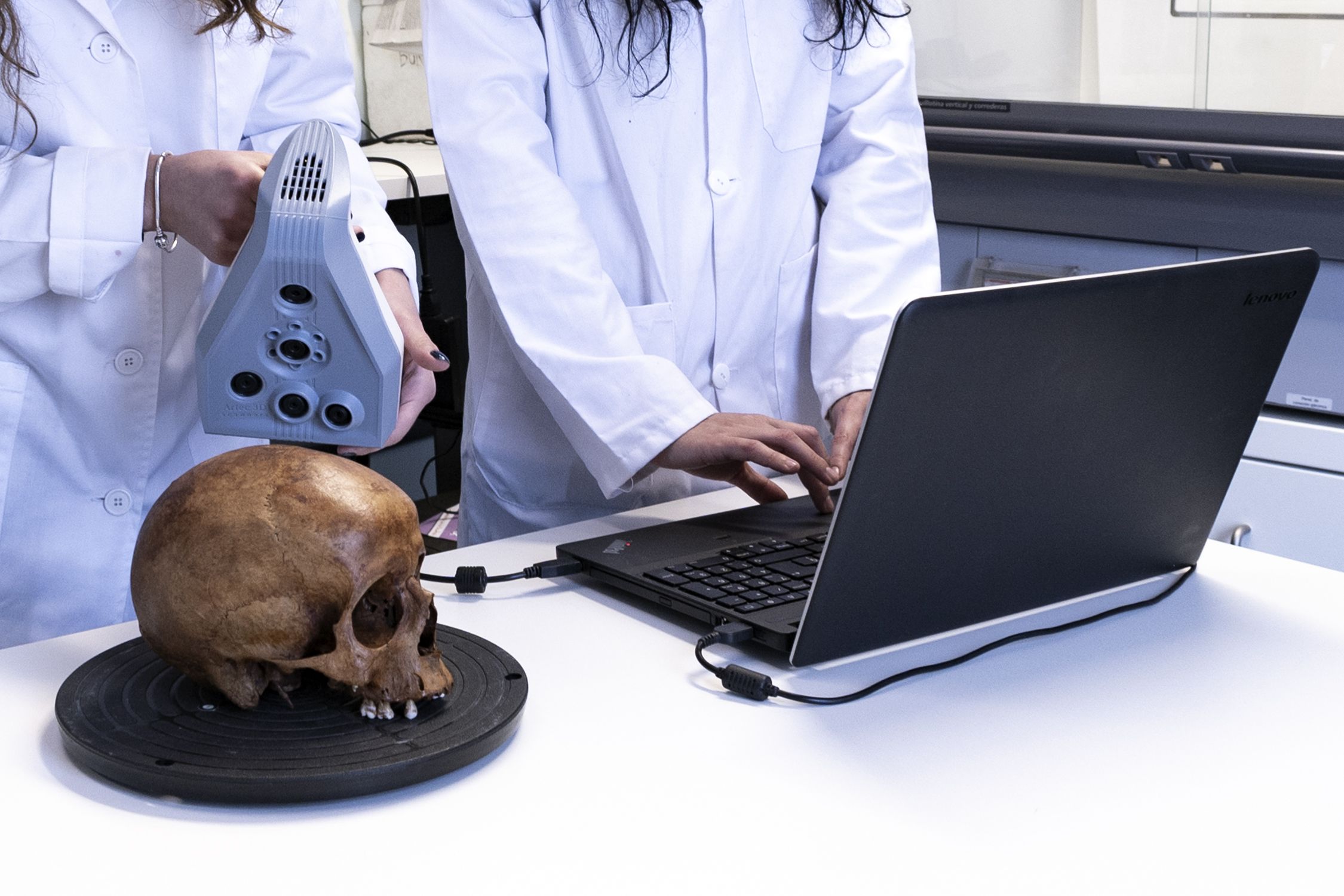
Across the world, disasters, conflicts and crime leave many human remains unidentified, delaying legal processes and uncertainty for families. Craniofacial reconstruction (CFR), used when no records exist, relies on scarce specialist artists. The process is slow and subjective. Panacea identified demand for a faster, science-based alternative, but training generative models requires large 3D datasets and computing power beyond an SME’s capacity.
The Solution
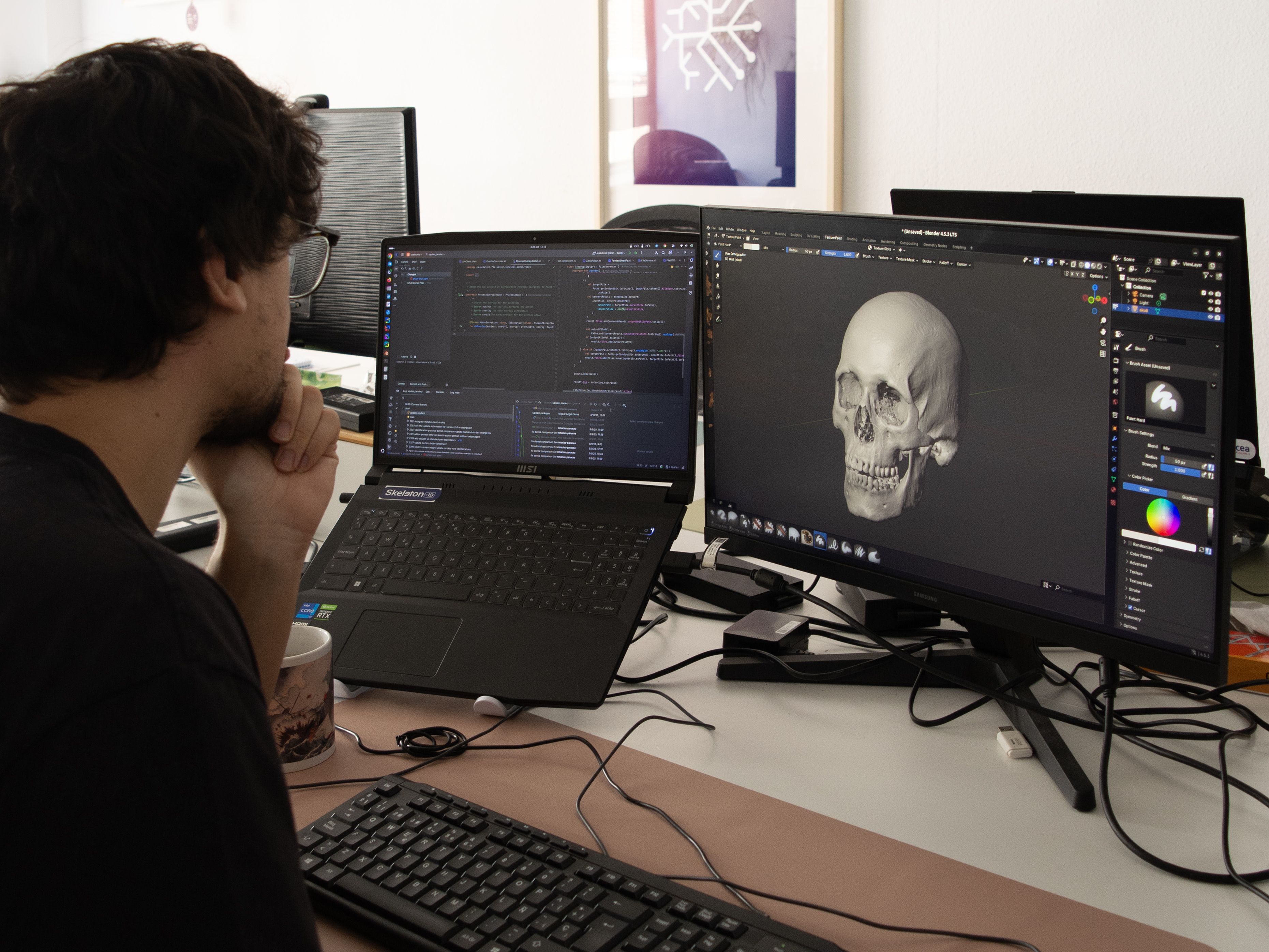
Through the FACEGEN project, Panacea applied generative AI techniques, including diffusion models, to automate craniofacial reconstruction. Access to high-performance computing enabled large-scale training, testing and validation. The most effective method uses multiple skull depth-map views to generate a full 3D facial reconstruction in seconds. In parallel, the consortium developed evaluation and reliability methods so forensic experts can assess and trust the results.
Impact
FACEGEN removes a critical bottleneck in forensic identification by delivering fast, affordable and consistent craniofacial reconstructions. For Panacea, integrating automated reconstruction into its Skeleton-ID platform enables a shift from bespoke consulting to a scalable, pay-per-use service model, dramatically expanding its addressable market. The project strengthened long-term collaboration with UGR and INRIA and accelerated Panacea’s innovation capacity. Technically, the validated diffusion pipeline has been adopted in a major €11M national R&D programme with Fujitsu and the Spanish National Police.
The social impact has been faster and more objective reconstructions that support judicial processes, improve identification rates and help families reach closure, while making advanced forensic capabilities accessible to regions lacking specialist expertise. The solution has no direct environmental impact but promotes more efficient use of forensic resources.
Benefits
- Reconstruction time reduced from weeks to seconds.
- Reachable market expanded from ~5% to nearly 80% of 10,000 global institutions.
- Scalable online, pay-per-use service enabled.
- Strengthened scientific partnerships with UGR and INRIA.
- Methods adopted in an €11M national project with the Spanish National Police.