


HPC and AI for Precision Engineering in Welding
Organisations involved
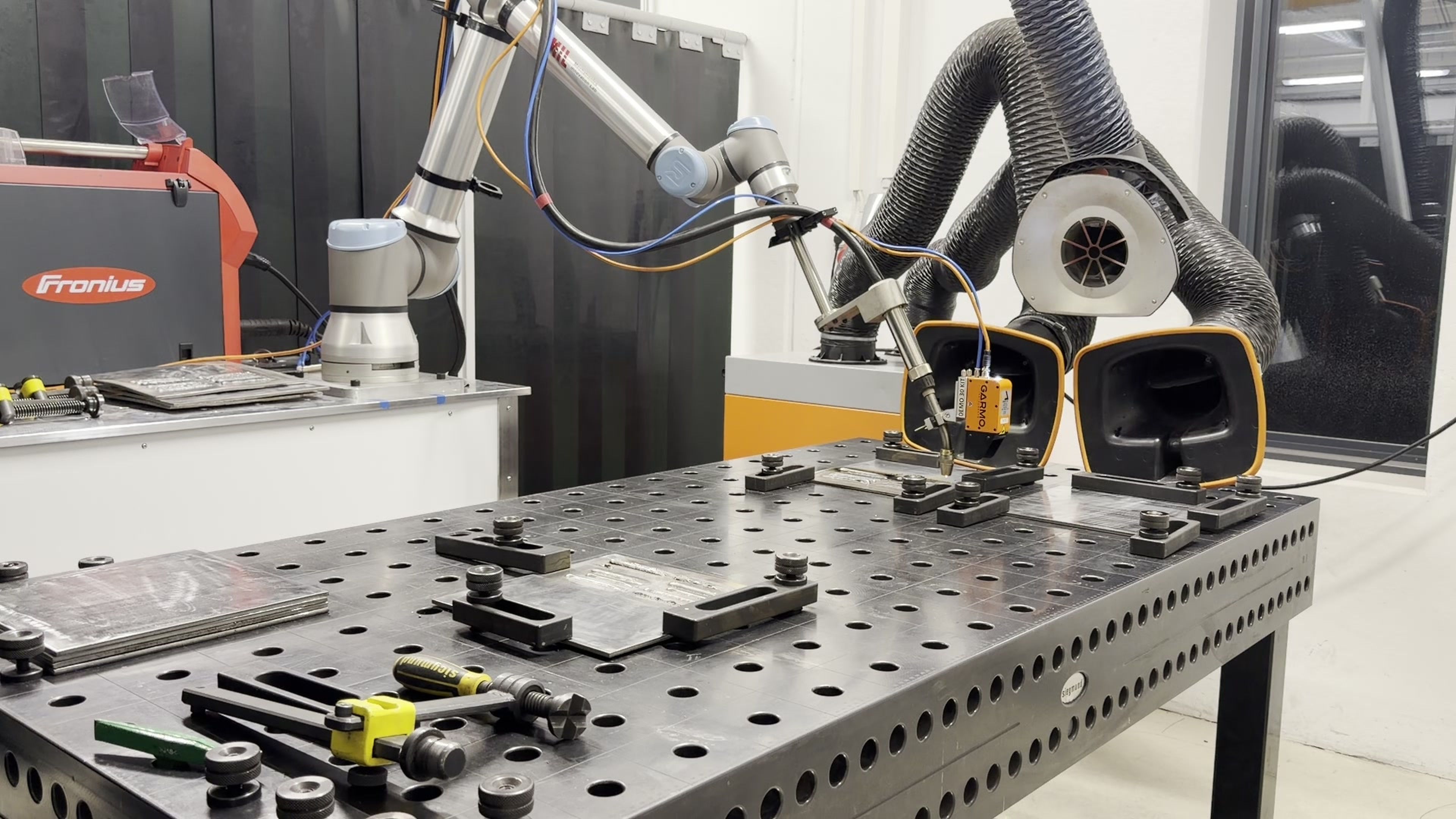
3D-Components AS (3DC) is a Norwegian SME that develops the RobTrack platform, a patented hardware-software system for robotised welding and directed energy deposition process development.
SimEvolution A/S is a Danish Independent Software Vendor and authorised Cadence partner and specialized in finite element analysis and Simufact Welding software.
Sigma2 AS is the Norwegian national HPC centre, who provided access to their Saga cluster in this initiative.
The challenge
Welding and directed energy deposition (DED) additive manufacturing are critical technologies for energy, construction, automotive and aerospace industries. However, process development remains heavily dependent on trial-and-error testing. Modern welding systems expose engineers to more than 50 interdependent parameters, making optimisation slow, costly and difficult to scale. A single qualification campaign can take weeks, consume significant quantities of premium alloys and energy, and still fail to achieve an optimum result. Across industry, inefficient testing contributes to substantial material waste and CO₂ emissions.
3D-Components had already developed its RobTrack platform, combining robotised welding with AI-assisted process screening. However, geometry-based analysis alone could not accurately predict thermal and structural behaviours. To deliver faster and more reliable recommendations, RobTrack needed high-fidelity thermomechanical simulations embedded directly into workflows. Running dozens of detailed finite element models required hundreds of processor cores and large-scale parallel computing. Conventional engineering workstations could not provide the throughput needed for rapid customer response, concurrent project delivery and commercial scalability, making HPC essential.
The solution
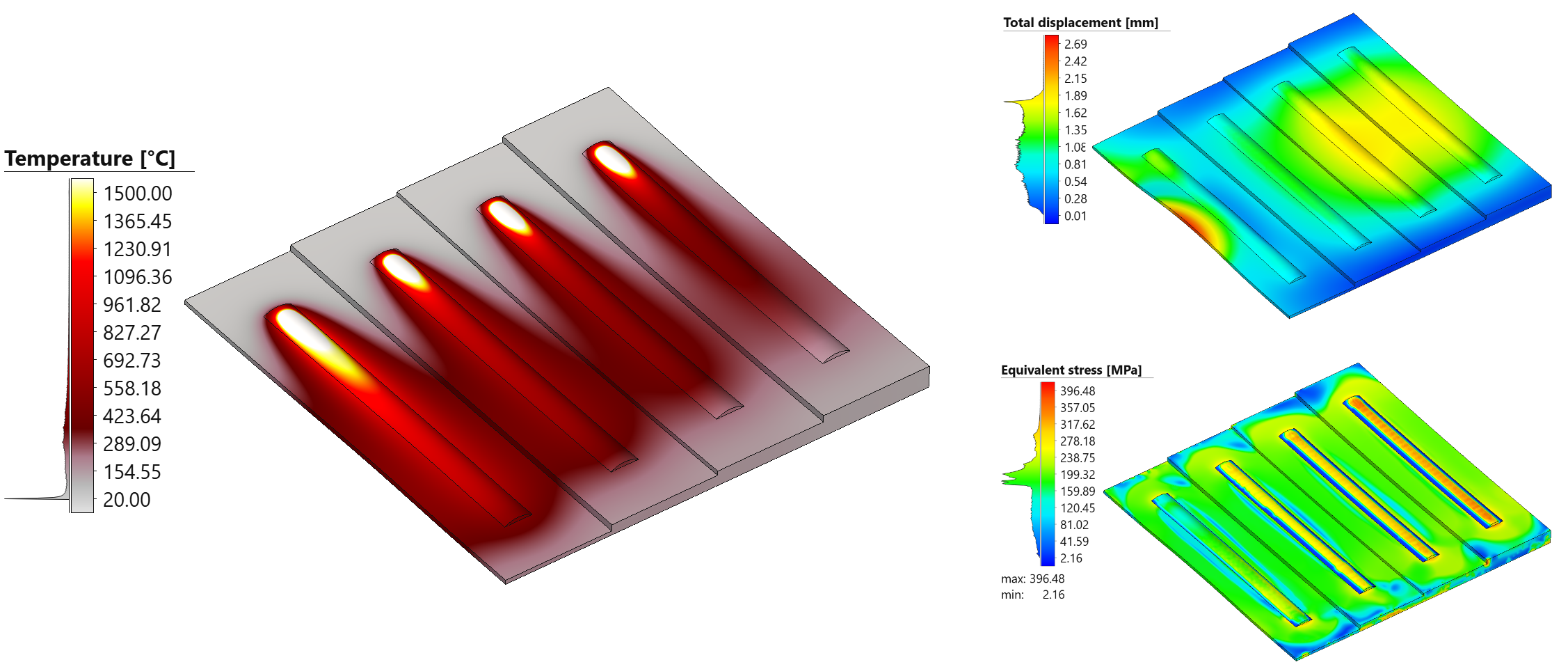
The SHAPE-AM project extended RobTrack with an automated simulation and AI workflow that transforms welding and DED process development into a fast, data-driven activity. Experimental configurations are automatically converted into detailed physics-based simulation models using Simufact Welding software. These models are executed on Sigma2’s Saga HPC cluster, using up to 256 processor cores per job to evaluate large numbers of parameter combinations in parallel.
A 40-case study that previously required around 2.5 days on a workstation can now be completed in approximately 1.5 hours. The resulting simulation data is used to train AI models that predict process quality and structural performance, including weld cooling rates with accuracy exceeding 98%. Engineers receive rapid decision support, reducing dependence on costly physical testing while improving process reliability and repeatability.
Business impacts
The project strengthens 3DC’s position in the rapidly growing robotised welding and additive manufacturing market. By combining HPC-powered simulation with AI-driven process intelligence, RobTrack evolves from a hardware platform into a scalable digital engineering solution. The capability has already supported integration with Siemens technologies and provides access to an estimated market of around 2,000 users.
The solution enables qualification campaigns to be completed up to 200 times faster, reducing development cycles from weeks to hours. Customers benefit from more predictable production outcomes, lower engineering effort and less reliance on specialist simulation expertise. Material waste and associated CO₂ emissions can be reduced by up to 90%, supporting sustainability goals while lowering costs. Even a 1% reduction in scrap on a €10 million production line can generate approximately €100,000 in annual savings, while projected revenues are expected to grow from €2 million to almost €26 million within six years.
Business Benefits
- Technology partnership established with Siemens, providing access to an initial market of approximately 2,000 users.
- Qualification and process development campaigns completed up to 200× faster than conventional approaches.
- Simulation throughput increased from 2.5 days to approximately 1.5 hours for a 40-case study.
- Up to 90% reduction in material waste and associated CO₂ emissions during process development.
- Operational costs reduced by around 60%, with potential savings of €100,000 annually even at a modest 1% scrap reduction on a €10M production line.