


HPC-Enabled Damage Control for Rental Car Fleets
Organisations involved
TUBEIQ is a Serbian SME developing low-code/no-code workflow automation and business-process-management solutions for enterprises seeking faster digital transformation.
DunavNET specialises in AI, IoT and advanced data solutions, and is responsible for AI development and HPC integration.
AAA-1 RENT is a vehicle rental provider that supplied operational expertise, business requirements and real-world validation of the solution.
The challenge
Vehicle damage assessment remains a major operational bottleneck across the rental-car, fleet-management and insurance sectors. Inspections are typically performed manually, requiring staff to review photographs, listen to audio statements, compare historical records and prepare written reports. This process is slow, subjective and prone to inconsistent damage classification, leading to disputes, delayed claims, increased administration costs and vehicle downtime. TUBEIQ recognised an opportunity to transform this process into an intelligent digital service capable of analysing multiple data sources and generating standardised reports.
The solution requires training and evaluating multimodal AI models using large datasets of images, audio, accident documentation and historical damage records. Training, fine-tuning and benchmarking computer-vision, speech-processing and genAI models demands substantial computing power beyond the existing capabilities of SME infrastructure. HPC was therefore essential for executing a large volume of parallel experiments, accelerate model optimisation and achieve the accuracy, scalability and reliability required for commercial application. The solution is innovative because it combines images, audio and documents within a single AI-driven workflow rather than treating each source separately.
The solution
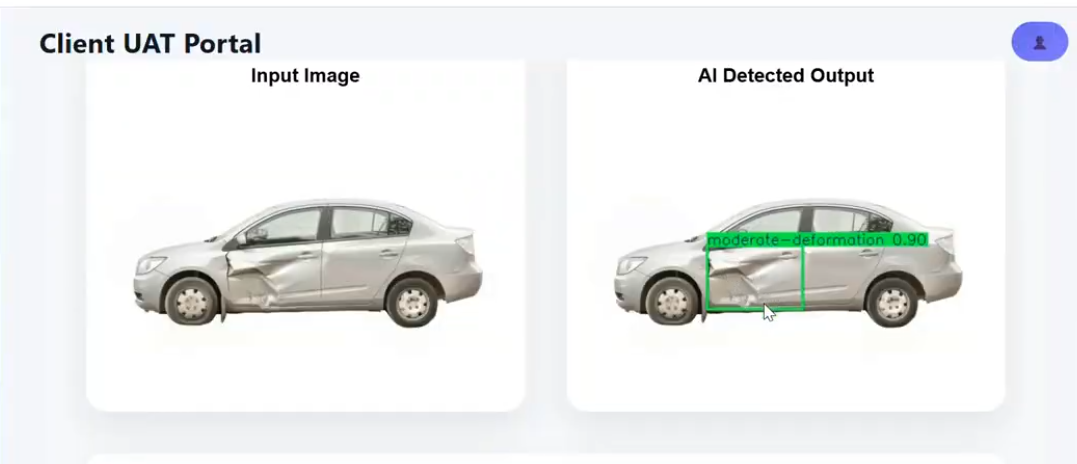
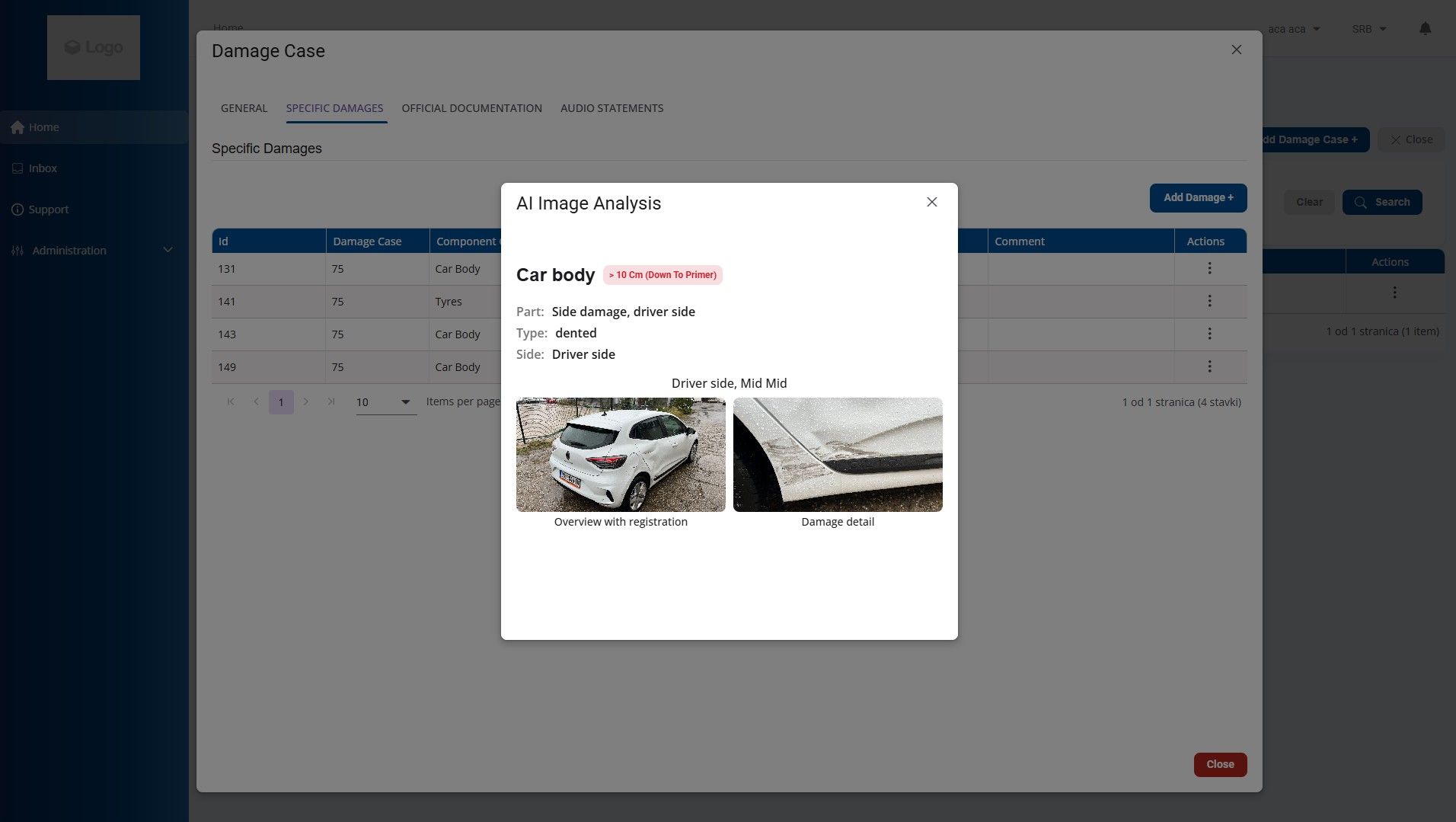
The Damage Control platform is an AI-driven service that automates vehicle damage reporting. The system detects and describes damage, converts speech to text, extracts information from documents using OCR and combines all evidence into structured reports. Computer vision, speech recognition, OCR and generative AI were integrated into a single workflow. Utilising the LUMI supercomputer, 6,162 GPU node hours were used to train, fine-tune and compare open-source AI models. This enabled parallel model training and validation, which reduced development cycles from weeks to days and identified the most accurate approach. The output is a standardised, machine-readable damage report ready for integration with rental, fleet and insurance systems.
Business impacts
TUBEIQ’s strategy is to expand beyond workflow automation into AI-enabled mobility and insurance solutions, creating a differentiated Damage Control product with strong commercial potential. The platform strengthens competitiveness through AI and HPC capabilities, supporting future SaaS and AI-driven business models. Market deployment is expected within 3–6 months of project completion, creating opportunities for recurring subscription revenues and sector-specific integrations. DunavNET also reinforces its position as a provider of scalable industrial AI solutions built on European HPC infrastructure.
For customers, the solution delivers faster and more consistent vehicle inspections, reducing manual administration and accelerating vehicle returns and claims processing. Early projections indicate significantly shorter damage-report processing times, and lower administration costs per vehicle. More transparent reporting can reduce disputes, improved customer trust and operational data.
Business Benefits
- Expansion of TUBEIQ’s product footprint into rental, fleet and insurance markets.
- Projected cumulative revenues exceed €500,000 within three years, with profitability expected from Year 2.
- 30–40% reduction in damage-report processing times for rental and fleet operators.
- 20–25% lower inspection and reporting costs per vehicle through automation.
- Up to 30% fewer damage-related disputes through more consistent and transparent reporting.