


Multimodal Foundation Model for German Property Insurance Claim Verification
Organisations involved
Main SME: PropertyExpert GmbH (PX) is a German technology-driven service and solution provider for the property insurance and real estate sector. Its clients include insurance companies, major retailers, and real estate portfolio managers. PX combines digital processes, AI and domain expertise to manage property damage claims fairly, consistently and in the best interests of all parties.
The challenge
Property insurers must verify repair quotations and invoices quickly and accurately. In Germany (where annual insurance premiums total €40 billion), millions of claims are processed each year. Storms, floods, and other weather events are becoming more frequent, while the number of loss adjusters[AF1] who validate damage claims is falling. This creates pressure to handle claims rapidly without reducing quality or compliance standards.
PX automates around one-third of incoming claims using a text-based model; key claims assessment decisions depend on visual evidence found in damage photos. General image-text models cannot interpret industry-specific details such as materials, repair methods, and regional practices. As a result, they struggle to verify that invoices match quotations exactly.
To enable PX’s automation to innovate around these complex cases, a multimodal model tailored to property-damage data was needed. Training such a model requires processing millions of high-resolution images alongside complex documentation workflows. This required access to high-performance computing so that PX could explore new model variants, run distributed training pipelines, and experiment with fusion methods that link written descriptions with imaging.
The Solution
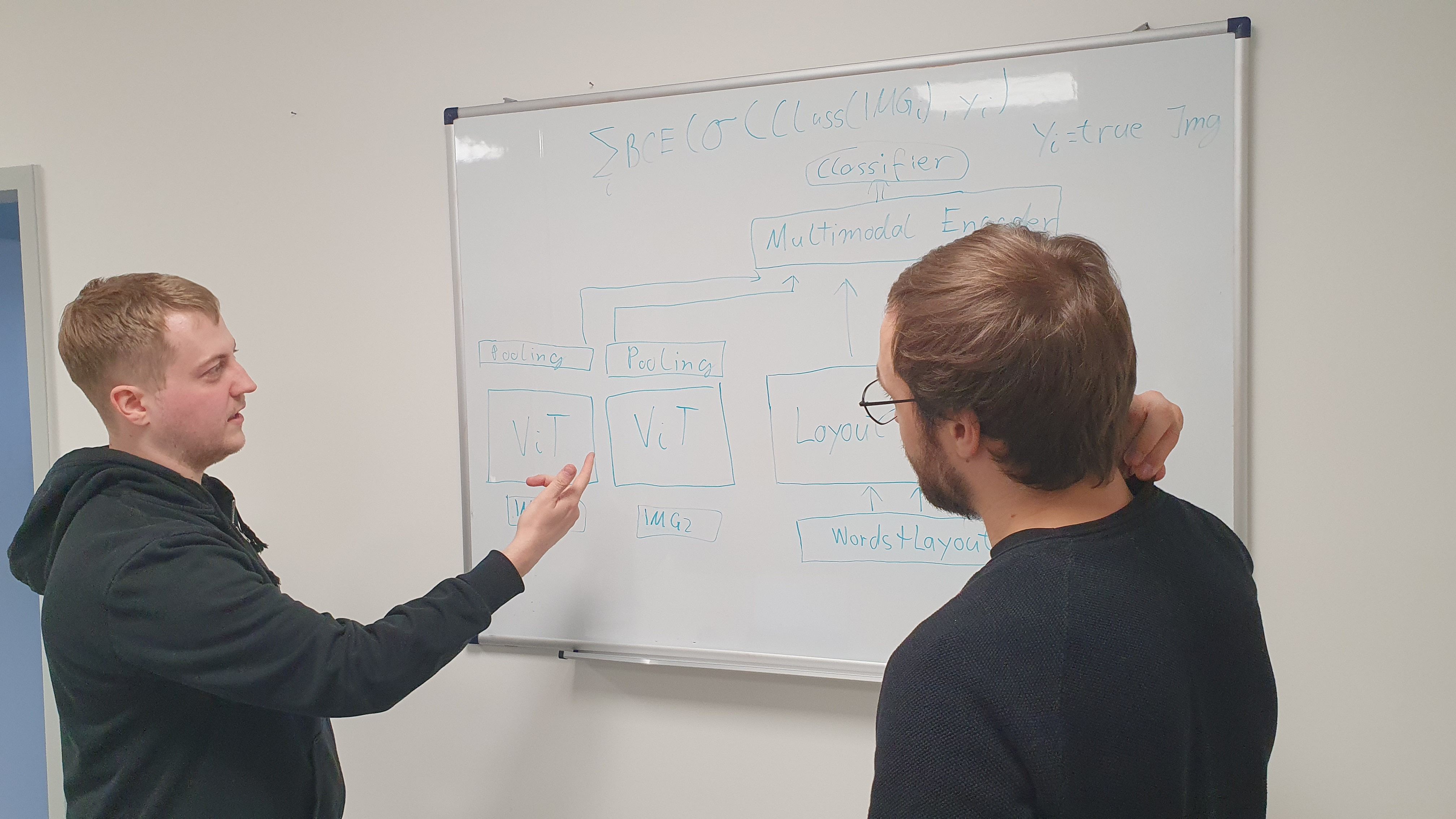
PX developed a multimodal AI pipeline that analyses invoices and the matching damage photos together. The new model extends their document-analysis system with an image-processing component and fusion layers that connect repair descriptions, invoice items, and visual evidence. By utilizing Meluxina HPC system, PX could run repeated cycles of data preparation, pre-training, and fine-tuning across multiple compute nodes. This allowed rapid testing of model designs and training strategies. Early results show a 1.2% improvement in decision accuracy, confirming the value of combining text and images.
Impact
PX’s ability to build and operate advanced multimodal systems has been significantly enhanced by using HPC system infrastructure. Early results already support a 4% increase in automated invoice decisions, thereby generating annual administrative cost savings of around €100,000 and strengthening PX’s competitive position.
Improved prediction accuracy leads to fairer and more consistent outcomes for policyholders and repair contractors, while faster decisions help households recover from severe weather events. The improved workflows also reduce pressure on insurers’ claims administration teams during peak periods.
More accurate digital assessments also reduce unnecessary site visits and follow-up inspections, lowering travel-related emissions. Efficient model training using mixed precision and controlled scaling reduces data centre energy consumption, supporting more sustainable AI development.
Benefits
- 9%+ accuracy improvement over GPT-4 on regulatory benchmarks, enhancing the precision of compliance analysis.
- +1.2% improvement in decision accuracy after the first full training cycle.
- Pre-processing pipeline reduced sample handling time to ~55 ms.
- Training achieved a 2.8× increase in model performance through code and workflow optimisation.
- Full cycle of data preparation and model training is now completed in 5 days.