


Semiconductor Metrology with Nanometre Precision Powered by HPC
Organisations involved
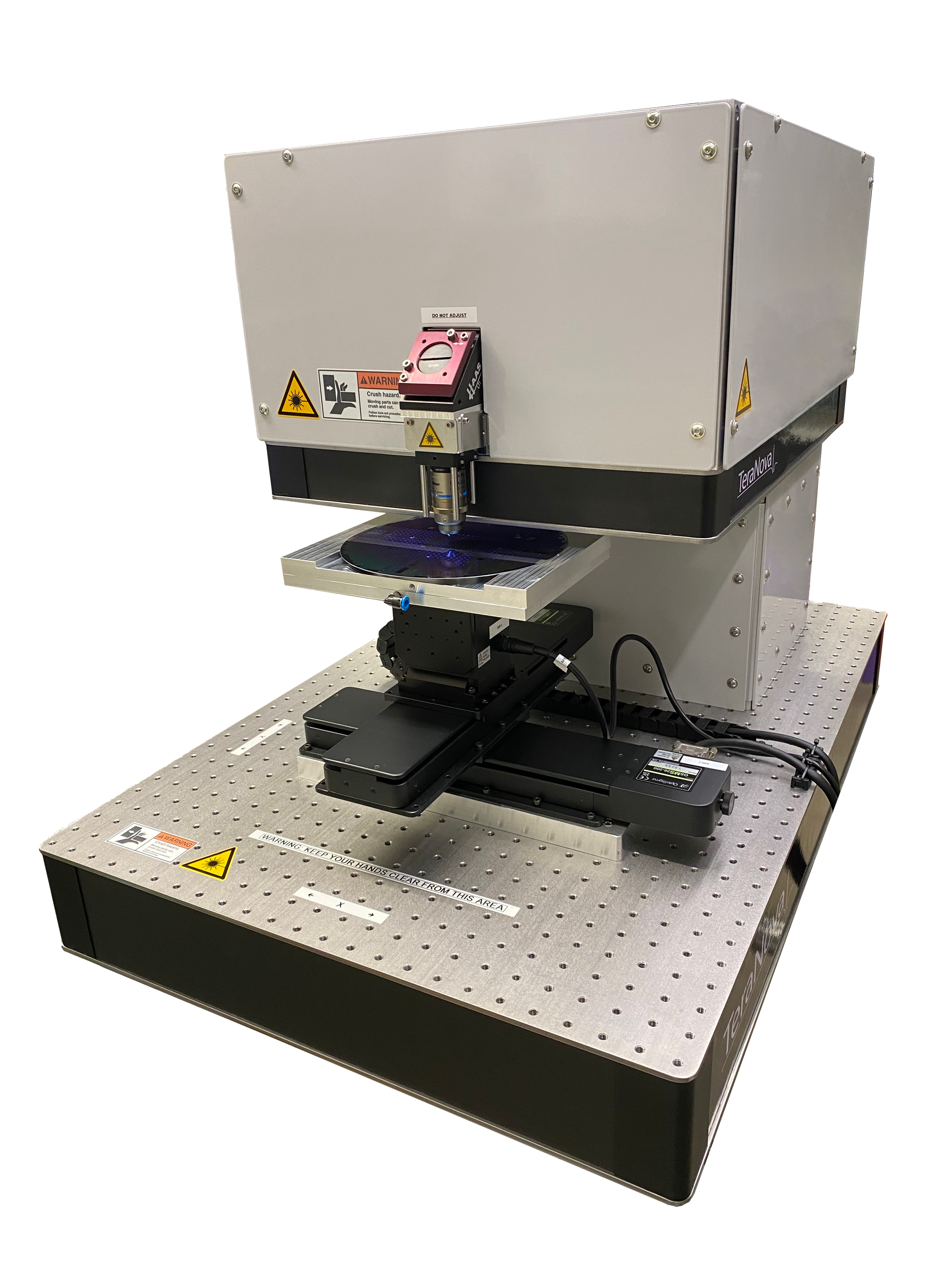
TeraNova is a Dutch SME developing and commercialising metrology and non-destructive inspection systems for functional nanostructures. Its instruments support quality control and characterisation in photonics and electronics manufacturing, helping producers improve performance, reliability and efficiency.
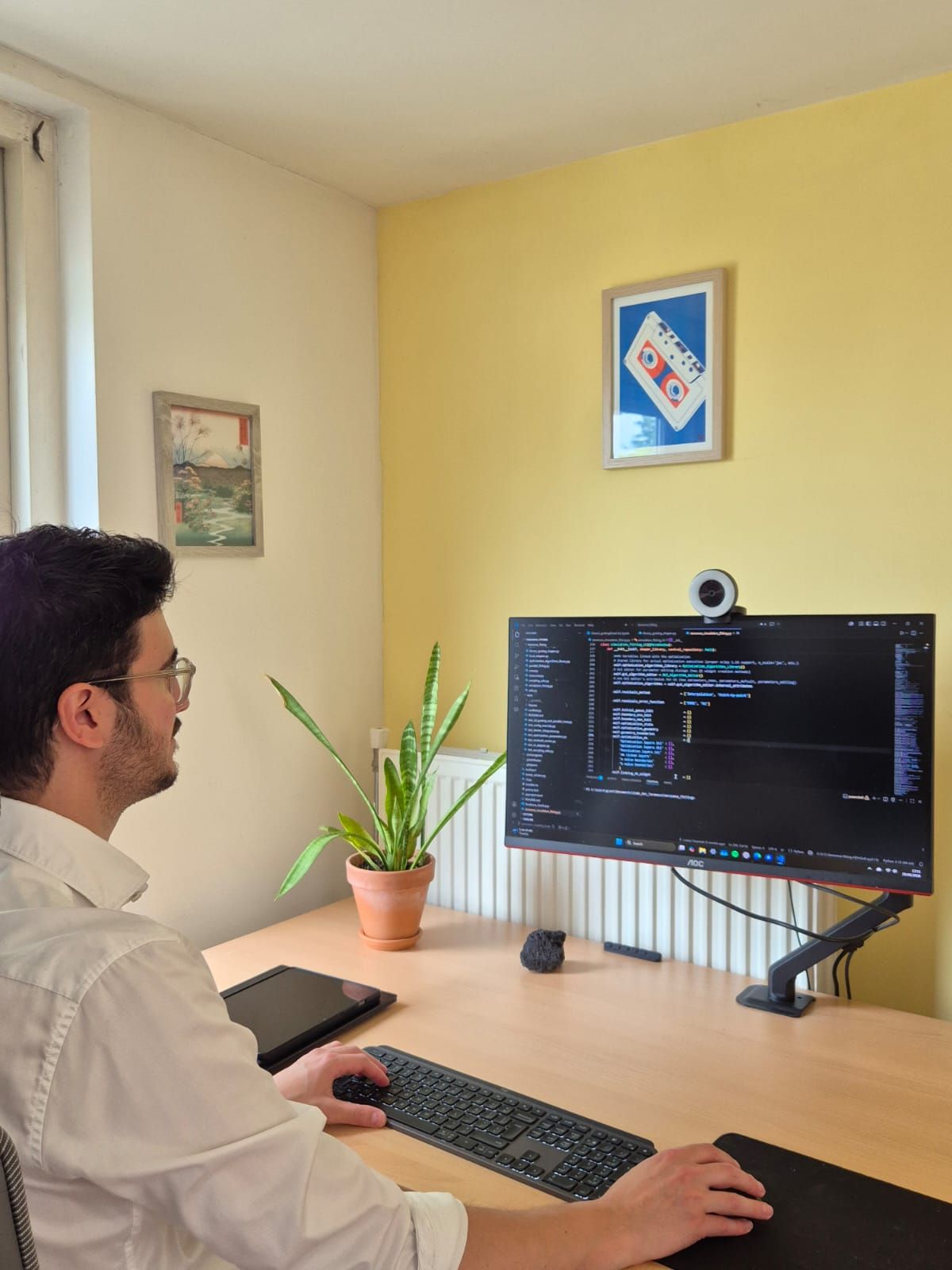
81Watts is an Estonian DeepTech SME specialising in computer science, HPC, AI and mathematical modelling. As Technology Expert, it supports advanced technology development.
The challenge
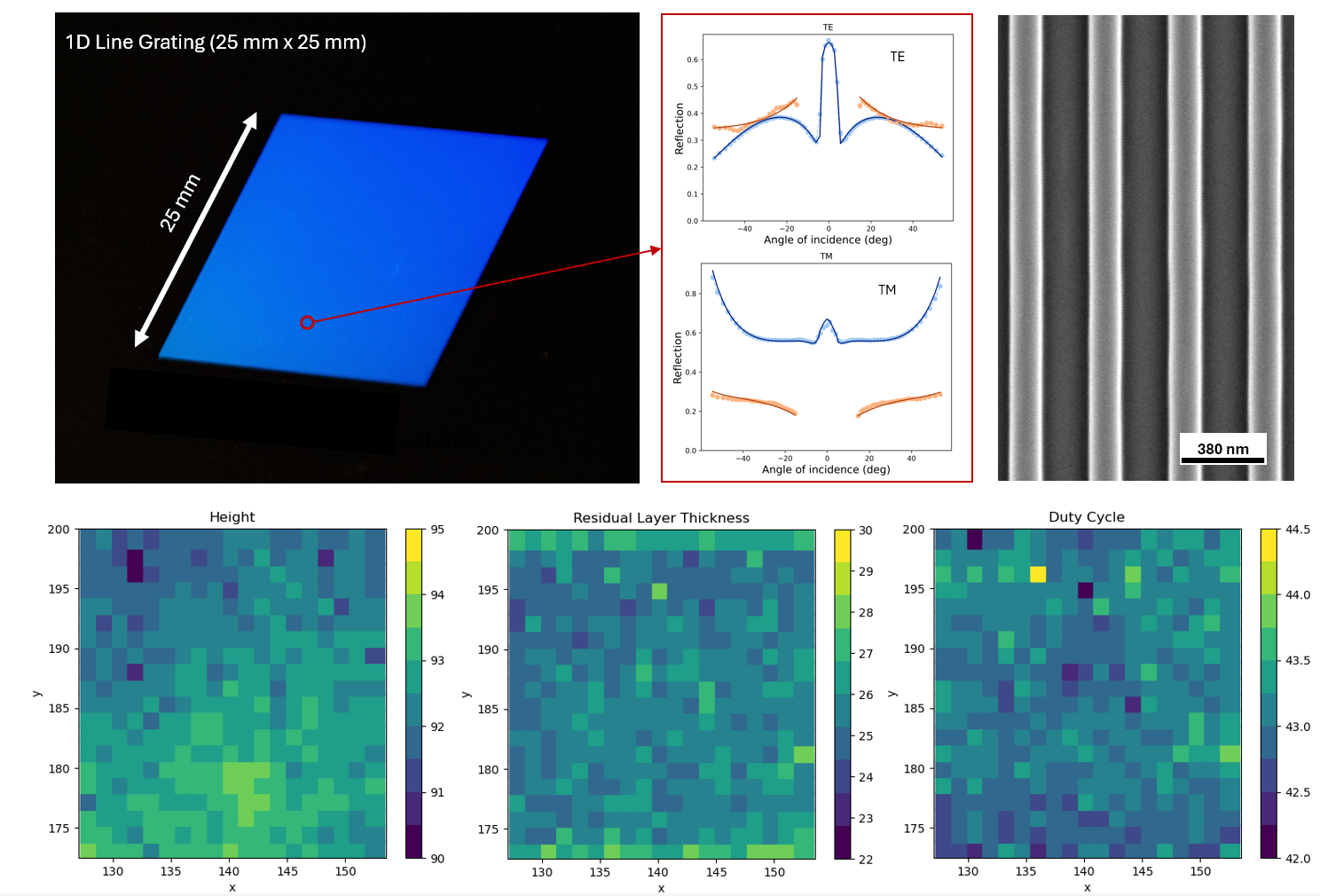
Large-area industrial wafers patterned with functional nanostructures are enabling photonics, metasurfaces and augmented-reality products, but manufacturers need to verify features with dimensional accuracy to a few nanometres. TeraNova’s business challenge was to deliver this precision while also extracting detailed cross-sectional geometry swiftly for industrial quality control.
The optical measurements must be matched against numerical models that solve Maxwell’s equations across many possible structure parameters. Each fit requires repeated, computationally-intensive simulations. A production batch may require many such analyses. Conventional workstations cannot explore these large parameter spaces rapidly or consistently enough to support scalable wafer inspection, thereby creating a bottleneck for TeraNova and its customers.
HPC was needed to run simulations and fitting tasks in parallel to shorten turnaround times, improve convergence and support the throughput expected in manufacturing. The innovation combines non-destructive optical measurement, physics-based modelling and AI-assisted sizing in a workflow designed to provide nanometre-scale insight without slowing industrial production.
The Solution
TeraNova and 81Watts developed a unified workflow using Rigorous Coupled-Wave Analysis to compare optical measurements with simulated nanostructures. Stochastic and gradient-based fitting refined the geometry, while machine learning improved starting-condition selection. Local and HPC executions were integrated with better logging, result handling and multi-stage processing.
The Deucalion EuroHPC supercomputer supported data preparation, synthetic-data augmentation, model training and inference, using approximately 6,400 GPU-hours and 10,000 kCore-hours. Parallel processing improved convergence on selected industrial samples and reduced computation time by approximately 40% compared with a retail PC, creating a faster, more reliable inspection workflow.
Business impacts
The experiment strengthens TeraNova’s commercial position by adding proven HPC-enabled capabilities to its LabScatter and AutoScatter metrology solutions. Execution around 40% faster than on a retail PC makes the platform better suited to production environments, where inspection speed, repeatability and scalability influence adoption. TeraNova can now show a clearer route from high-precision laboratory analysis to higher-throughput industrial quality control, improving competitiveness and supporting wider deployment.
Manufacturers can benefit from shorter inspection cycles, earlier identification of process deviations and richer information on nanostructure geometry without destructive testing. This creates opportunities in photonics, augmented reality, metasurfaces and advanced optical manufacturing, supporting customer acquisition and revenue growth. The project also broadens 81Watts’ expertise in HPC-enabled metrology and quality assurance, supporting related solutions in other industrial markets.
Business Benefits
- Computation time is reduced by approximately 40% versus a retail PC, improving the throughput of nanostructure inspection workflows.
- Used 6,400 GPU-hours and 10,000 kCore-hours on Deucalion to scale data preparation, model training, inference and synthetic augmentation.
- Improved fitting convergence and precision by exploring larger parameter spaces and applying machine-learning-assisted initialisation.
- Enhanced LabScatter and AutoScatter with a more robust, scalable workflow designed for higher-throughput industrial quality control.
- Opened commercial opportunities in photonics, augmented reality and advanced optical manufacturing, while expanding 81Watts’ expertise.